

Running a wedding venue is equal parts hospitality, project management, sales, and caretaking. Some days you’re polishing a ballroom floor like it’s a museum exhibit. Other days you are mediating a timeline debate between a photographer, a planner, and a well-meaning aunt who swears the ceremony “has to start at golden hour.”
If you’ve been in this industry for more than five minutes, you already know the truth: the venue sets the tone. Couples may remember their vows, the speeches, the food, the first dance, but the venue is the container that holds all of it.
This is a practical, real-world look at how to run a wedding venue day-to-day: the pillars of operation that bring in bookings, the pillars that protect your weekends, and the pillars that keep your reputation intact.
Pillar 1: Exceptional Customer Service

Couples don’t remember every detail you planned. They remember how you made them feel while the details were happening. When you run a venue, customer service isn’t a department. It’s the product. It shows up in how fast you respond, how you set expectations, how you hold boundaries, and how calm the room feels when something shifts.
Great service doesn’t mean “yes” to everything. It means clarity, steadiness, and a sense that someone competent is steering. Here are some ways great venues exercise exceptional customer service:
Communication rhythms that keep everyone calm
Most venue stress comes from uncertainty. Couples start filling in blanks with worst-case scenarios. A simple rhythm prevents that: when you’ll reply, where questions should go, what gets handled in email versus a call, and which decisions need a deadline.
A practical move: give every couple a “communication map” early. This can include office hours, typical response windows, and one place where official answers live (so you’re not answering the same question in email, Instagram DMs, and texts from a bridal party member you’ve never met).
Boundaries that still feel warm
Venues that burn out usually have fuzzy boundaries. Venues that feel cold usually have boundaries with sharp edges. There’s a middle: rules that sound like hospitality.
Instead of “No outside alcohol,” you can frame it as: “All alcohol needs to be served through licensed bartending for guest safety and compliance.” Same boundary. Different emotional experience.
The tour is a service moment, not a sales moment
Couples decide quickly whether they can picture themselves with you. Tours land best when they feel like a guided story: how the day flows, where guests gather, what rain looks like, how you handle setup, and how you prevent chaos.
We like tours that include one “real talk” moment: a gentle description of what couples often underestimate (guest flow, sound restrictions, timing) and how you help. It builds credibility without turning the tour into a lecture.
Handling conflict without letting it spread
There will be hard moments: a family member who wants to move chairs during ceremony seating, a planner running behind, a vendor who pushes your rules. The goal isn’t to “win.” The goal is containment. You want the couple insulated from stress.
That takes practice: neutral language, short sentences, and the confidence to say, “We’ll handle it,” and mean it.
A venue with great service has a particular vibe: calm competence. That’s what people recommend to their friends, and it’s what keeps your staff sane.
Pillar 2: Strategic Marketing & Branding
Marketing a venue isn’t about louder posts or constant discounts. It’s about being easy to understand, easy to trust, and easy to book. Couples are comparing venues while eating lunch at work, half-paying attention. If your messaging needs a lot of interpretation, you lose them.
This is where many venues get stuck because the work feels abstract. It doesn’t have to. You’re building a clear story, then placing it where couples already look.
Here are a few marketing elements that consistently pull their weight:
- A homepage that answers real questions fast. Couples want to know: capacity, price range, what’s included, what rain looks like, and what the day typically costs in total (even if you’re giving ranges).
- Photo sets that show the full day. Pretty ceremony shots are table stakes. Include cocktail hour flow, indoor backup plans, lighting at night, and what 150 guests looks like in your space.
- Language that fits your actual experience. If your venue is hands-on and supportive, say that. If you’re “DIY-friendly,” say what that means in practice.
- A consistent visual identity. Fonts, colors, tone, and photo style should feel like the same place everywhere: website, Instagram, brochures, follow-up emails.
- Search visibility that matches buyer intent. Couples search with high-intent terms tied to location, style, and capacity. That’s why your content strategy matters, and why seo for wedding professionals is worth treating like an operating system rather than a side project.
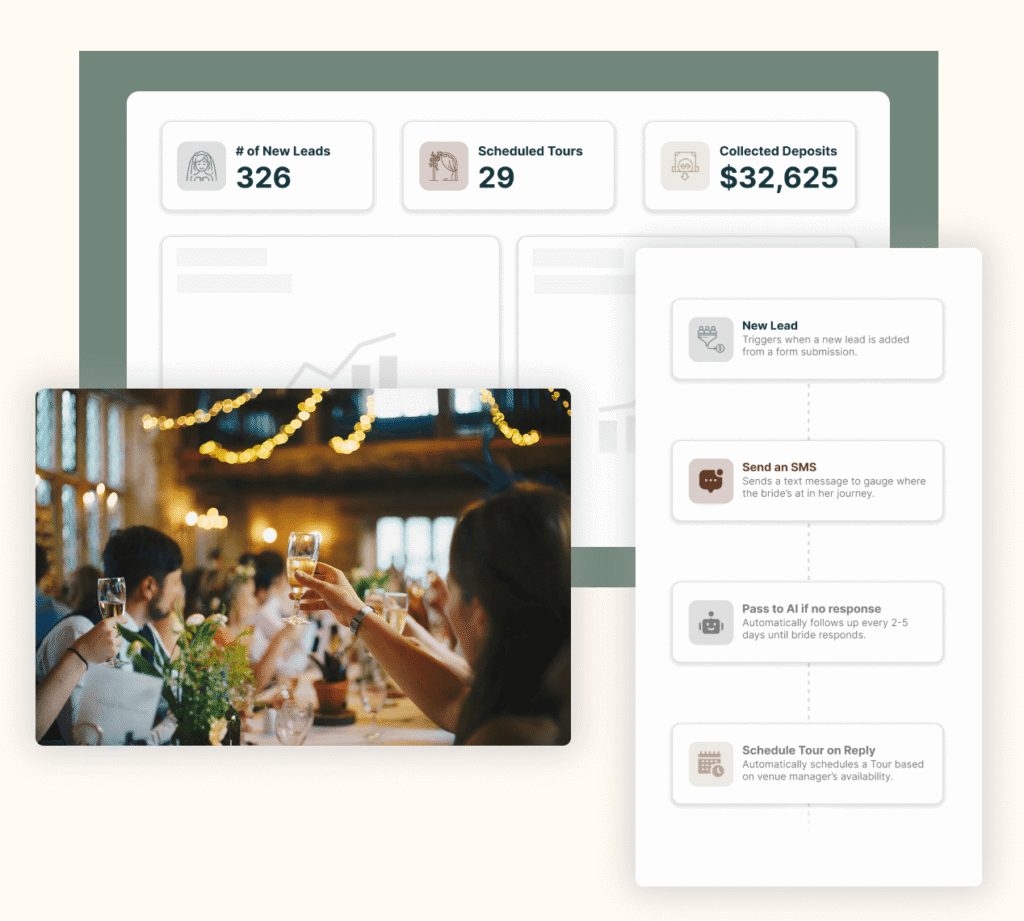
- A follow-up process that doesn’t feel like a void. The biggest silent leak in venue marketing is leads who inquire, then disappear because the next step wasn’t clear. We’ll touch on this more later.
Remember, branding isn’t just a logo. It’s the consistent feeling someone gets when they interact with you. If your brand voice is calm, your replies can’t be frantic. If your brand is luxury, your processes can’t feel messy. If your brand is approachable, your rules can’t read like legal warnings.
When marketing is working, you feel it in your calendar: more qualified inquiries, fewer mismatched tours, and couples arriving already confident they want your kind of experience.
Pillar 3: Solid Financial Management
Most venues don’t fail because they don’t book weddings. They fail because cash flow gets weird, costs creep, and nobody is watching the numbers closely enough until a slow season hits.
Financial management for wedding venues isn’t glamorous, but it’s a form of protection. It gives you choices. It keeps you from making panicked decisions in February.
Here’s a practical financial structure you can run with. Think of it as a set of habits, not a spreadsheet fantasy:
- Know your true cost per wedding.: Include cleaning, utilities, consumables, trash haul, staffing, wear-and-tear, and admin time. Venues often price based on competitors and vibes, then wonder why margins feel thin. Many couples allocate roughly 40–50 percent of their total wedding budget to the venue. That puts a lot of pressure on this one decision, and it’s why pricing clarity and value perception matter so much.
- Separate “revenue” from “cash in the bank.”: A season can look booked and still be cash-tight if deposits are low and expenses land early. Track payment schedules and expense timing together.
- Build pricing that matches workload.: Saturdays cost more because they demand more. Dates near holidays can carry extra labor. If your pricing doesn’t reflect operational reality, your team pays the difference in stress.
- Set aside maintenance money on purpose.: Every venue has a future roof, future parking repair, future HVAC repair, future landscaping redo. If you wait until it hurts, it hurts more.
- Treat add-ons like a real product line.: Add-ons can be meaningful income, extra hours, rehearsal time, décor storage, ceremony locations, furniture upgrades… if they’re clearly presented and consistently delivered.
- Review performance monthly, not “when you have time.”: Track inquiries, tours, bookings, close rate, average revenue per event, and where leads came from. When you do this monthly, you can adjust calmly.
Money clarity changes how you operate. It stops the “busy but broke” feeling. It helps you hire earlier, maintain the property proactively, and keep your service quality consistent through peak season.
Pillar 4: Vendor Partnerships & Networking

A venue doesn’t operate alone. Your reputation is shaped by every vendor who touches your property: planners, caterers, photographers, bands, rental companies, bartenders, even transportation. Strong vendor relationships create smoother event days and better client experiences—because your venue becomes a place professionals like working.
This is also one of the fastest ways to grow referrals without chasing trends.
A healthy vendor network starts with mutual respect and clear expectations. Vendors want to know what you care about: load-in process, sound limits, kitchen rules, trash removal, lighting restrictions, preferred paths for gear, and what happens when something goes off-plan.
A few practices that tend to work well:
- Host a once-or-twice-a-year vendor open house where vendors can see updates to the property and ask questions.
- Share a short vendor guide that’s easy to skim and actually reflects real-life operations.
- Treat planners as partners. They’re often the ones buffering stress for couples, and they remember venues that make their job easier.
- Keep your preferred vendor list honest. It should be vendors you trust, not vendors who pressured you to list them.
When it comes to outreach, venues sometimes overlook one simple asset: a clear contact list for local partners and referral sources. Having a reliable bridal leads list helps you stay organized about who you’re building relationships with, especially when you want steady collaboration with planners, photographers, bridal shops, and coordinators in your region.
Vendor relationships compound over time. The payoff isn’t only referrals. It’s fewer event-day problems, faster resolutions, and a stronger reputation in the local wedding ecosystem.
Pillar 5: Robust Operational Systems
Operations are what keep a venue steady as bookings increase. When systems are loose, every event requires extra mental load and small details start to slip. When systems are clear, the work feels more predictable and the experience stays consistent for couples and staff.
Good operations do not take the personality out of a wedding day. They give it room to breathe.
Standardize the day so it can still feel personal
Weddings are deeply personal, but that does not mean every event needs a completely custom process behind the scenes. A shared framework gives everyone a baseline to work from. When the flow is familiar, teams can focus on people instead of logistics.
Most venues benefit from building and maintaining a set of repeatable assets that rarely change:
- Event-day timeline templates with room for common variations
- Setup diagrams for frequently used floorplans
- A rain plan that is realistic and ready to use
- Load-in and load-out procedures vendors can follow independently
- Opening and closing checklists that protect the property
- Clear responsibility guidelines so questions do not bottleneck
When these pieces exist, the day runs more smoothly without feeling scripted.
Keep details in one place, not scattered across inboxes
Email works until it does not. Over time, information ends up spread across forwarded threads, attachments, text messages, and personal notes. As staff rotates and calendars fill, that fragmentation creates confusion.
Keeping inquiries, tour notes, contracts, payment status, and event details in a shared place reduces backtracking and last-minute clarifications. Fully Booked Venue helps venues organize booking and event information in a way that supports day-to-day visibility without adding extra steps or complexity.
Make training repeatable and easy to step into
When a venue relies on one person to remember how everything works, growth becomes fragile. Clear systems make it easier for staff to step in with confidence. Training does not need to be exhaustive. It needs to be consistent.
Document what matters most, what gets checked, what needs to be recorded, and how communication should sound. When those expectations are clear, service quality stays steady even as teams change.
Operations may stay out of sight, but they influence nearly every part of the experience. When systems are in place, the business feels easier to manage and the team has more space to be present on event days. That steadiness is part of what couples are trusting when they book a venue.
Final Thoughts on How to Run a Wedding Venue
All of these pillars matter. Strong service, clear operations, solid finances, and good vendor relationships create the foundation of a well-run venue. They make the work sustainable and the experience reliable. But if leads are not coming in consistently, that foundation does not get much of a chance to do its job.
A venue can be organized, professional, and well-loved by past couples and still struggle with an uneven calendar. When inquiries slow down or tours stop converting, the rest of the business feels heavier than it should. At that point, the issue is rarely effort or care. It is usually visibility, lead flow, or how interest is being handled at the front end.
Fully Booked Venue focuses on that exact problem. The work centers on helping wedding venues bring in more qualified leads, manage inquiries and tours with clarity, and turn interest into booked dates. It supports the part of the business that determines whether all the operational and service work actually results in a full calendar.
A strong foundation matters. But bookings are what keep the business moving. When the systems behind lead generation and conversion are handled with intention, the rest of the venue can finally operate the way it was meant to.
Key Takeaways
- A well-run venue starts with clear systems, not constant improvising
- Customer service is felt most in communication, boundaries, and follow-through
- Marketing should attract couples who already fit how your venue operates
- Financial clarity keeps busy seasons from feeling unstable
- Strong vendor relationships lead to smoother event days and fewer problems
- Operational structure supports consistency without taking away personality
- A solid foundation matters, but consistent leads are what keep the calendar full
Frequently Asked Questions
What does it take to run a successful wedding venue long term?
A successful wedding venue depends on more than a beautiful venue and a full calendar. A venue owner has to manage service expectations, staffing, pricing, and vendor coordination while protecting the property and guest experience. Many owners underestimate how much operational structure it takes to support consistent weddings and events without burning out.
How do most wedding venue owners get more weddings booked?
Most venues rely on a mix of marketing visibility, referrals, and follow-up discipline to book more weddings. A clear marketing strategy, strong relationships with vendors, and a reliable process for handling new leads all matter. Many wedding venues struggle not because couples are not interested, but because inquiry handling breaks down before clients book.
Do I need a business plan to start a wedding venue business?
A wedding venue business plan helps clarify costs, pricing, and long-term goals, especially if the venue is a new business or involves a large investment. A solid business plan outlines expected cash flow, major costs, and how the venue business fits into the broader wedding industry. This planning step protects owners from underestimating how much money and time the business will require.
What legal and logistical issues should venue owners plan for?
A wedding venue owner must account for local zoning laws, broader zoning laws, liability insurance, and possibly a liquor license, depending on the events hosted. This is especially important for a barn wedding venue or any venue on a rural property, where regulations can differ by location. These details affect how the space is used, how guests are served, and how events are managed.
How do venues improve the guest and client experience on the wedding day?
Clear systems help venue teams deliver exceptional customer service on the wedding day without chaos. That includes managing vendor load-in, protecting the bridal suite, guiding guests through the space, and coordinating with wedding planners. When service is organized, clients feel supported on their big day and owners protect both reputation and profit margin.