

You’ve done the work. You claimed your Google Business Profile, collected reviews, and made sure your NAP is consistent across directories. And your map pack position hasn’t budged.
That’s the gap between basic local SEO and advanced local SEO. The basics get you indexed. What we’re covering here is what actually moves your position in the map pack when you’re competing against venues with the same fundamentals in place.
Advanced local SEO for wedding venues is the set of tactics that go beyond citation cleanup and profile claiming. It’s the layer of work that Google rewards with higher map pack placement: behavioral signals, content depth, topical authority, and the kind of structured data that lets search engines extract and present your information with confidence.
If you’re a venue manager trying to figure out why a competitor with fewer reviews is sitting above you in local results, this is where the answer lives. We’ll cover seven specific tactics, what each one does, how to implement it, and what to watch for when it’s working.
Quick Answer
What moves a wedding venue’s map pack position beyond the basics?
Once your Google Business Profile is claimed and your citations are clean, the tactics that actually shift your map pack ranking are: behavioral signals (clicks, calls, direction requests), GBP content freshness (posts, photo updates, Q&A), on-page local content that builds topical authority, structured data markup, local backlinks from vendors and publications, and consistent review velocity. These signals tell Google your listing is actively managed and genuinely relevant to searchers in your area.
Tactic 1: Build Behavioral Signals You Can Actually Influence
Google watches what people do after they see your listing. Clicks to your website, calls from the listing, and requests for directions are behavioral signals that factor into map pack rankings. The problem is most venue managers don’t think about them as something they can influence. They can.
Make Your GBP Listing Worth Clicking
Your listing photo is the first thing couples see before they decide whether to click through. A dark, outdated exterior shot competes poorly against a venue whose cover photo shows a fully styled reception with natural light. Update your primary photo seasonally. Use photos from your best-lit, best-styled events. The click-through rate difference between a strong and weak cover photo is meaningful, and clicks are a signal Google uses.
Use Your Business Description to Match Search Intent
Your GBP description isn’t just a summary of your venue. It’s an opportunity to match the language couples use when they search. Phrases like "outdoor ceremony space," "all-inclusive wedding venue," or "wedding venue for 150 guests" should appear naturally in your description if they describe your space accurately. Google reads this text when deciding relevance.
Seed Your Q&A Section
The Q&A section on your GBP listing is often empty or full of spam. You can post questions yourself and answer them, and you should. Think about what couples actually ask during a tour: Is catering in-house or can we bring our own? Is there a bridal suite? What’s the parking situation? Answering these questions in the Q&A gives Google more text to index and gives couples the information they need to take the next step.
When your listing gives people what they’re looking for, they click, call, and request directions. That activity feeds back into your ranking.
Tactic 2: Run Your GBP Like a Content Channel
Google treats your GBP listing as a living document. Listings that get regular updates signal to Google that the business is active and worth surfacing. Listings that go months without changes lose ground slowly, and you often don’t notice until your impressions report shows a decline.
Post Every Two Weeks at Minimum
GBP posts expire after a week if you’re not using the "Event" post type, but they still contribute to freshness signals. A posting cadence of every two weeks keeps your listing active. Posts don’t need to be elaborate: a recent wedding photo with a caption about your space, an announcement about a tour date, or a seasonal offer all count. The goal is consistent activity, not polished marketing copy.
Add Photos on a Schedule
Photo freshness matters. A venue whose most recent photos are two years old looks, to Google’s algorithm, like a venue that may no longer be active. Add new photos from recent events monthly. If you’re in a slow season, use that time to photograph details: the ceremony space in afternoon light, the bar setup, the bridal suite. Google also tracks how often users view your photos, so variety and quality both contribute.
Respond to Every Review Within 48 Hours
Review responses are indexed content. When you respond to a review and naturally mention your venue name, location, or type of event, you’re adding keyword-rich text to your listing. Keep responses genuine and specific to what the couple mentioned. A response that says "We’re so glad your spring ceremony in our garden space felt special" does more for your listing than "Thank you for your kind words."
Think of your GBP as a content channel that needs the same attention as your Instagram, just with higher ranking payoff.
Tactic 3: Build Topical Authority with Location-Specific Content
Map pack rankings don’t live in isolation from your website. Google connects your GBP listing to your website content, and venues whose websites demonstrate topical authority on wedding-related searches in their location tend to rank better in the map pack too.
Create Location-Specific Landing Pages
If you serve couples from multiple cities or counties, a single homepage isn’t enough to capture local intent. A page specifically targeting "wedding venues in [City]" or "outdoor wedding venues near [Neighborhood]" tells Google exactly what geography you serve. These pages need real content: descriptions of your space relative to that location, travel time from major areas, nearby accommodations, and actual photos. Thin pages with keyword stuffing backfire.
Write About What Couples in Your Area Are Searching
A blog post about "what to look for in a wedding venue in [Region]" or "how to plan a wedding at an outdoor venue in [Your State]" builds topical relevance around queries your target couples are making. These posts don’t need to mention your venue in every paragraph. The goal is for Google to associate your website with the topic of wedding planning in your area. That association carries over to your map pack ranking.
Connect Your Website Content to Your GBP
Make sure the URL linked in your GBP points to your most relevant page, often your dedicated weddings page rather than your homepage. If you’ve built location pages, link to the one most relevant to your primary market. Google uses the content of your linked website when evaluating the relevance of your listing.
In our experience, venues that build consistent location-specific content over six to twelve months see measurable movement in their map pack position, even in competitive metro markets.
Tactic 4: Structured Data That Helps Google Understand Your Venue
Structured data is code added to your website that tells search engines, in explicit terms, what your business is and what it offers. For wedding venues, this matters because it helps Google surface your information in rich results and gives the algorithm more confidence when deciding whether to include you in map pack results for specific queries.
Add LocalBusiness and EventVenue Schema
The most important schema types for a wedding venue are LocalBusiness and EventVenue. At minimum, your schema should include your business name, address, phone number, URL, geo coordinates, price range, opening hours, and the types of events you host. This mirrors what’s on your GBP listing, but having it on your website reinforces the signal.
Add FAQ Schema to High-Value Pages
If your weddings page has a frequently asked questions section (and it should), mark it up with FAQ schema. This gives Google the option to display your questions and answers directly in search results, which increases your visibility and click-through rate without requiring a higher ranking position.
Use Event Schema for Open Houses and Venue Tours
If you run open house events or bridal showcases, marking them up with Event schema gets them indexed and sometimes surfaced in Google’s event results. Couples searching for venue tours in your area can find your events directly in search. It’s a distribution channel most venues ignore completely.
Structured data doesn’t guarantee a ranking improvement on its own, but it reduces ambiguity for Google’s algorithm. When your listing, your website, and your structured data all tell the same story, Google has more confidence placing you in competitive results.
Tactic 5: Get Local Backlinks From Sources Google Trusts
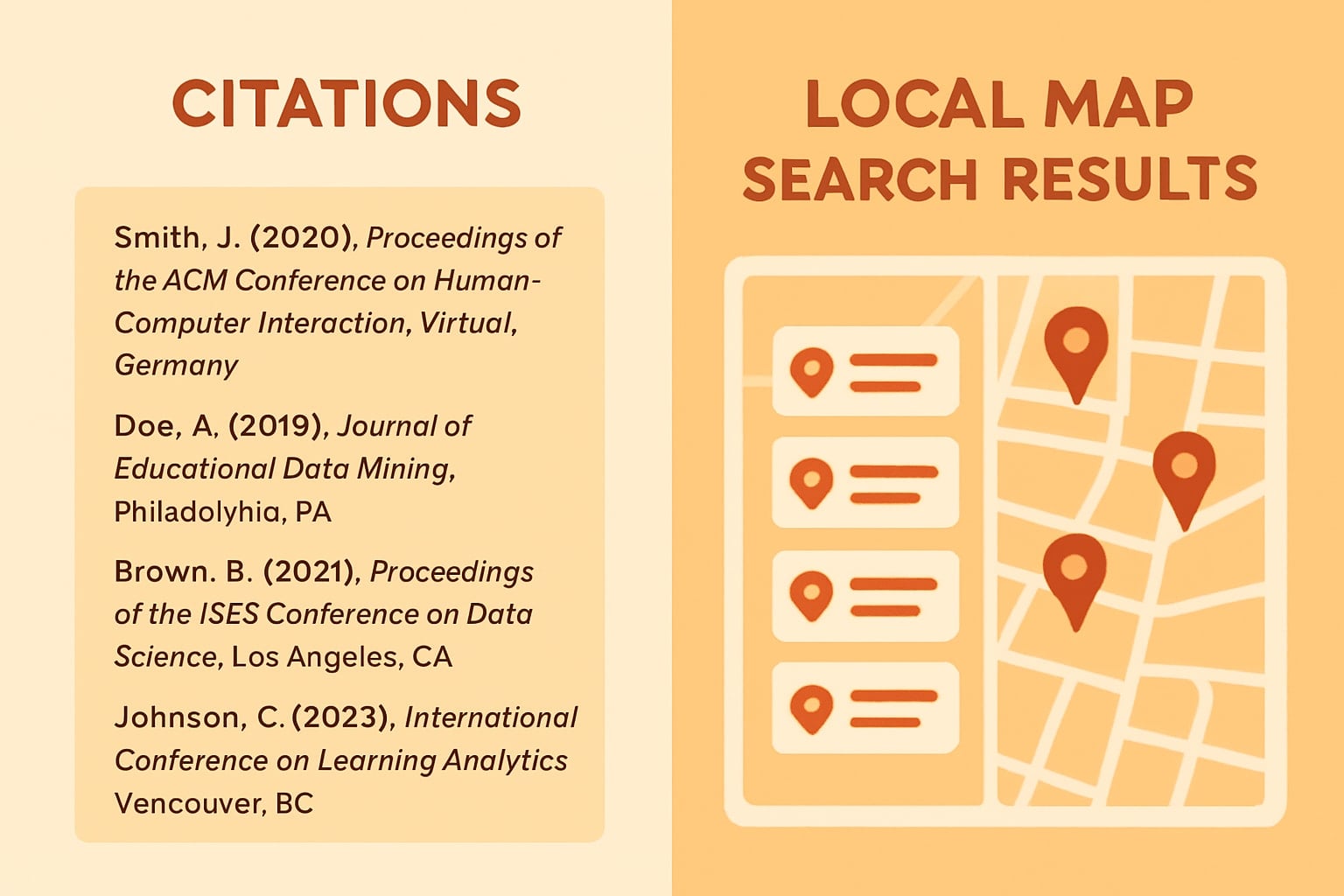
Backlinks from locally relevant, high-authority websites are one of the stronger ranking signals for map pack placement. Most venue managers think about backlinks in terms of national wedding directories. The local links are often more valuable and easier to get.
Build a Preferred Vendor Page (and Ask for Reciprocal Links)
If you have caterers, photographers, florists, and DJs you regularly recommend, create a preferred vendor page on your website with links to each of them. Then ask them to link back to you from their own websites. A photographer who lists ten preferred venues on their site, with a link to each venue’s website, is providing Google with a local relevance signal. These links cost nothing and are genuinely useful to couples who find them.
Get Listed in Local Publications
Local wedding blogs, regional lifestyle magazines, and city-specific event planning websites often publish venue guides. Getting your venue included in these guides, even without a paid placement, provides a locally relevant backlink. Reach out directly with a press kit and a recent photo set. Many of these publications are actively looking for content.
Pursue Links from Local Hospitality and Tourism Sites
Local tourism boards, convention and visitors bureaus, and hospitality associations often maintain venue directories. These links carry local geographic relevance that national directories don’t. In our experience, a single link from a regional tourism board carries more local ranking weight than several listings in national wedding directories.
The pattern we see with venues that climb in the map pack is that their backlink profile includes a mix of national directory listings and locally specific links from vendors, publications, and community organizations. The local links are what differentiate them.
Tactic 6: Build a Review System, Not Just a Review Request
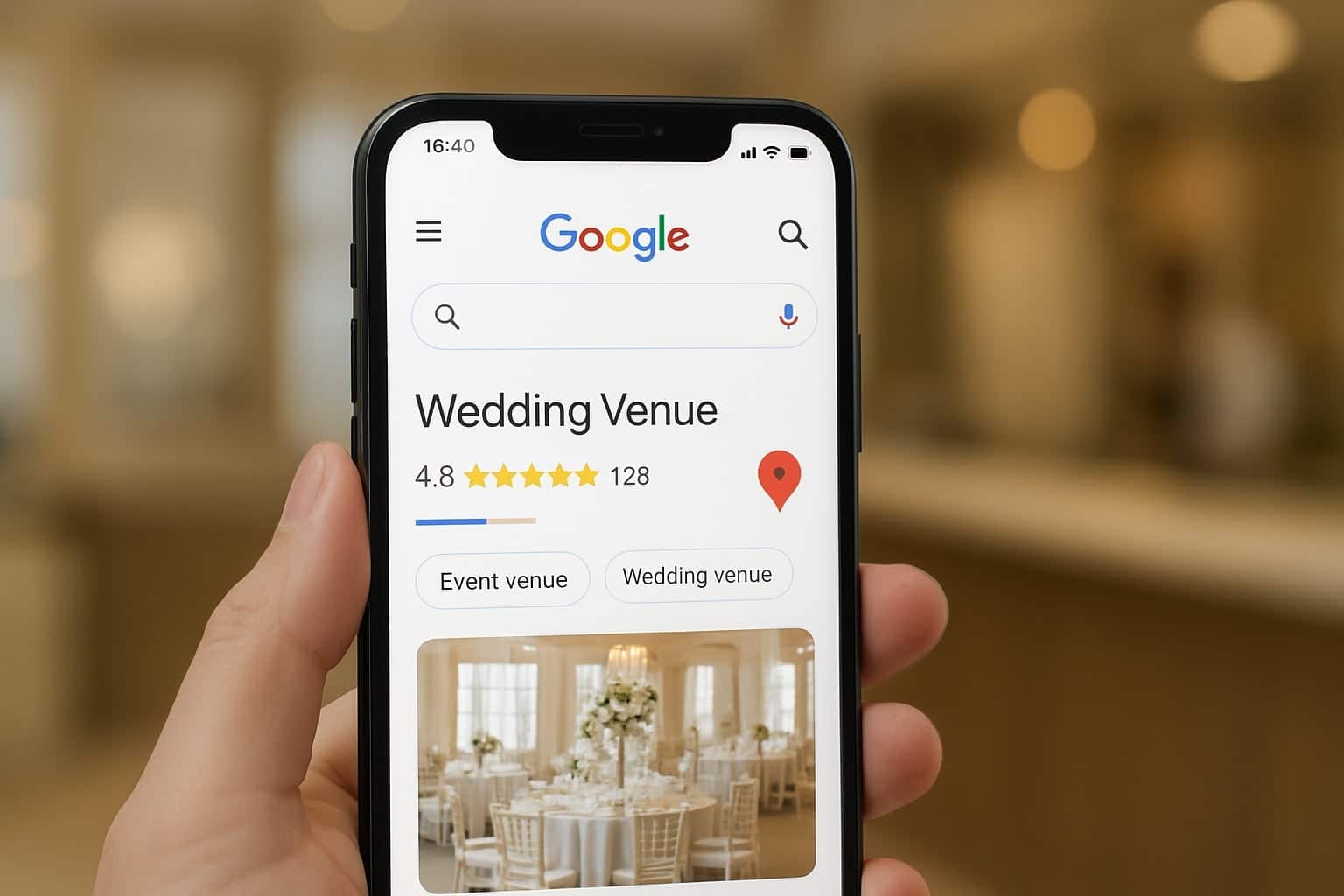
Reviews are a well-known ranking factor. What’s less understood is that it’s not just the number of reviews that matters. Google weighs review velocity (how recently and frequently you’re getting them), review diversity (which platforms they appear on), and how you respond to them.
Build a Review Request Into Your Post-Event Process
The venues we work with that consistently get reviews have one thing in common: they ask at a specific moment in the post-event process, not whenever someone remembers to. The most effective timing is 48 to 72 hours after the wedding, when the couple is still in the emotional high of the event and before the thank-you card writing begins. A short, personal message with a direct link to your Google review page converts better than a generic follow-up email sent two weeks later.
Spread Reviews Across Platforms
Google reviews carry the most direct weight for map pack rankings, but reviews on The Knot, WeddingWire, and Facebook contribute to your overall authority. When a couple is happy to leave a review, it’s worth asking them to choose the platform where you’re thinnest. Maintaining review presence across three to four platforms also protects you if one platform’s reviews are flagged or removed.
Respond in a Way That Adds Context
When you respond to a positive review, you have a small window to add naturally keyword-relevant content to your listing. A response that references your ceremony space, your location, or a specific feature of your venue adds indexed text that generic responses don’t. Keep it genuine. Couples can tell when a response was written by a template.
A consistent review system, with specific ask timing, a direct link, and a follow-up sequence, produces steadier review velocity than ad hoc requests. Steady velocity signals to Google that your business is actively serving customers.
Tactic 7: Fix the Local Signals Your Competitors Are Missing
The last tactic is less a single action and more an audit mindset. Once your fundamentals are solid, your next ranking gains often come from finding the specific gaps your direct competitors haven’t addressed.
Check Your Competitors’ GBP Listings Directly
Look at the venues ranking above you in your target map pack. Check their GBP listings: How many photos do they have? How recent are their posts? Do they have a populated Q&A section? Are their reviews recent? Are there categories they’ve claimed that you haven’t? The gaps in their listings are your opportunities. If none of them are posting regularly to GBP, that’s low-friction ground to take.
Run a Citation Gap Analysis
Your citations need to match across directories, but there are likely directories where your competitors are listed and you’re not. Tools like BrightLocal or Whitespark can run a gap analysis that shows you which directories competitors appear in that you don’t. Each gap is a citation you’re missing. Filling them closes the authority gap.
Look at Their On-Page Content
If a competitor is ranking above you in the map pack, their website may be providing stronger local content signals. Check what their weddings page covers compared to yours. Do they have a dedicated page for outdoor weddings, or micro-wedding packages, or elopement ceremonies? If they’re covering subtopics you’re not, that topical depth is contributing to their ranking advantage. Adding those pages or sections to your site fills the gap.
The venues that hold strong map pack positions over time aren’t just doing the right things. They’re watching what’s working in their specific competitive set and filling gaps before those gaps become expensive to close.
What to Track as You Implement These Tactics
Tracking the right metrics tells you whether your work is moving the needle or whether you need to adjust. For advanced local SEO, there are specific signals worth watching.
GBP Insights: Check your Google Business Profile performance monthly. Track calls, website clicks, and direction requests. If you implement a tactic and these numbers don’t move within 60 to 90 days, the tactic may not be the right lever for your market, or it may need time.
Map Pack Position: Tools like BrightLocal and Local Falcon let you track your map pack ranking for specific keywords across a geographic grid. This gives you a clearer picture than Google Search Console alone, because map pack results vary by the searcher’s location within your area.
Impressions in Google Search Console: Impressions tell you how often your website appears in search results. A sustained increase in impressions, even before clicks move, typically signals that your topical authority work is taking hold. A drop in impressions, like the 35% drop this article was written to address, signals that something in your content or citation profile needs attention.
Review Velocity: Track how many new reviews you’re getting each month across all platforms. If velocity drops, your request process may have broken down somewhere. If velocity is steady but your ranking isn’t improving, the issue is likely in a different signal category.
These four metrics, checked consistently, give you enough information to diagnose where your local SEO is working and where to focus next.
How long does it take for advanced local SEO tactics to improve my map pack ranking?
Most tactical changes take 60 to 90 days to show measurable movement in the map pack. Behavioral signals like clicks and calls can shift rankings faster, sometimes within a few weeks, because they’re real-time inputs. Content-based tactics like location pages and blog posts take longer because Google needs time to crawl, index, and assess relevance.
Do I need to hire an SEO agency to implement these tactics?
Not for all of them. GBP content updates, review request processes, and Q&A seeding are tasks your team can handle with a consistent process in place. Structured data markup and citation gap analysis are more technical and often worth outsourcing if you don’t have someone on staff comfortable with code and SEO tools.
How many Google reviews do I need to rank in the map pack?
There’s no fixed number. In less competitive markets, venues with 30 to 50 reviews rank well if the other signals are strong. In competitive metro markets, you may need 100 or more to be in contention. Review velocity matters as much as total count. A venue with 80 reviews and 10 new ones in the last 90 days typically outperforms a venue with 120 reviews and none in the past year.
Does my website affect my Google Business Profile ranking?
Yes. Google connects your GBP listing to your website and uses your site’s content as part of the relevance assessment. Venues with strong, location-specific website content consistently outperform those with thin or generic sites, even when the GBP listing itself looks similar.
What’s the difference between map pack SEO and regular SEO?
Map pack SEO (also called local SEO) focuses on ranking in the three-business local results that appear on Google Maps and at the top of location-based searches. Regular SEO targets organic blue-link results. The signals differ: map pack rankings weight GBP activity, reviews, citations, and behavioral signals more heavily. Both matter for venue visibility, and they reinforce each other when your website and GBP work together.
A 35% drop in impressions over 30 days is a signal, not a verdict. The tactics here address the most common reasons venues lose ground in the map pack: stale GBP listings, thin on-page content, behavioral signals that aren’t being generated, and competitive gaps that have gone unaddressed.
The work isn’t complicated, but it requires consistency. GBP posts that stop in February, review requests that depend on someone remembering, and location pages that never got written are all common patterns we see when a venue’s local ranking starts to slip.
If you want to know exactly where your venue stands across these seven signal categories, a strategy call is a practical starting point. We’ll look at your GBP activity, your citation profile, your on-page content, and your competitive position in the map pack, and tell you specifically what to prioritize for your market.
The venues holding the top map pack positions in their markets aren’t doing anything exotic. They’re doing the fundamentals consistently and filling the gaps their competitors leave open. That’s a replicable approach.