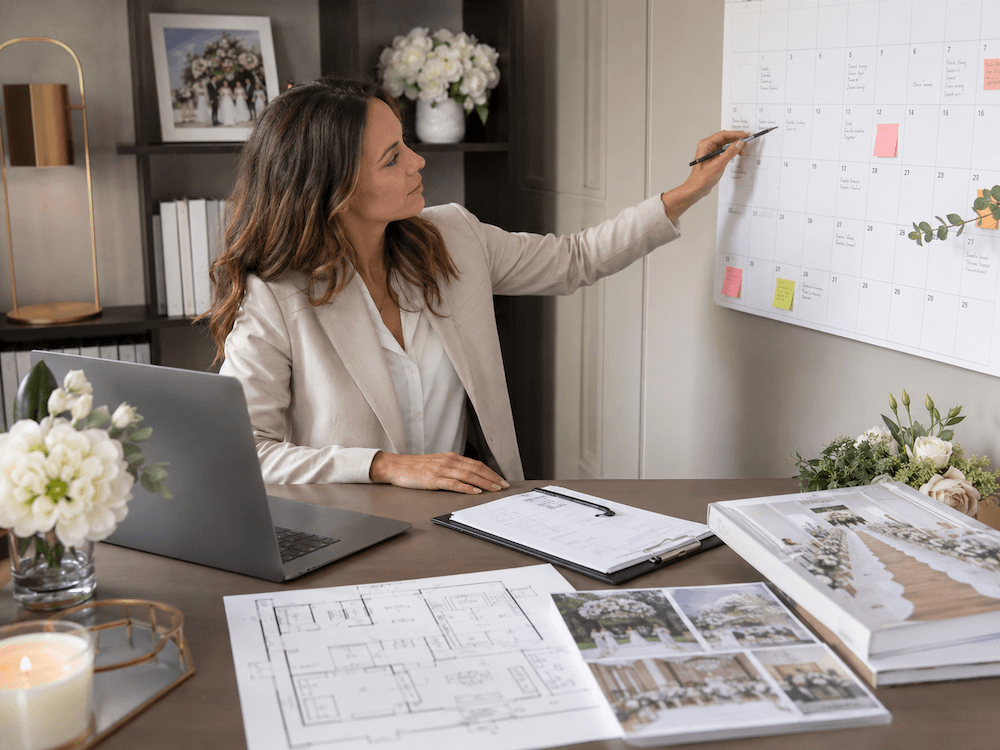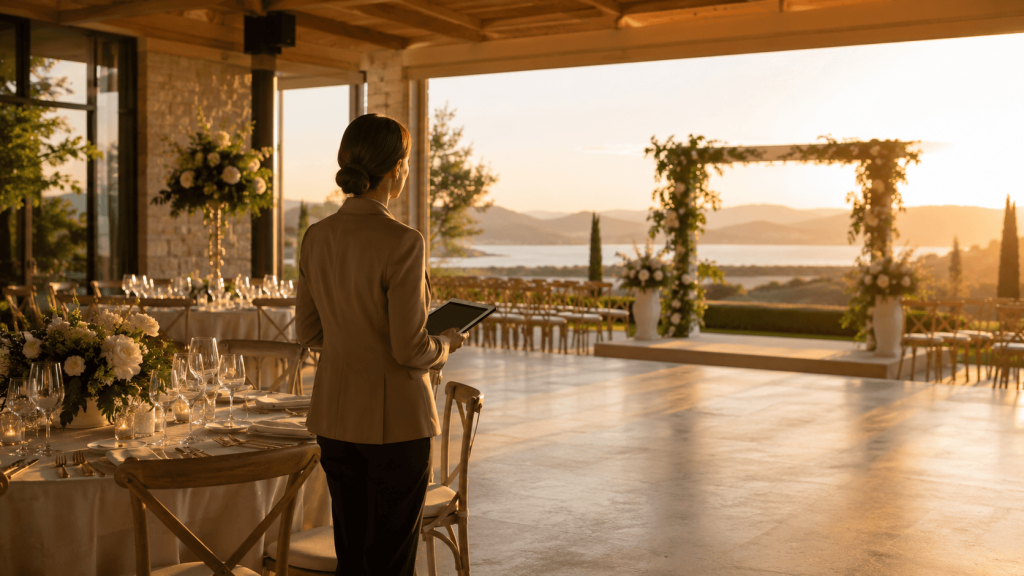

Thinking about owning a wedding venue? Learn what the day-to-day looks like, how bookings actually happen, and what keeps your calendar full.
What doesn’t get talked about as much is how the business actually runs once you’re in it. Not just the events themselves, but everything around them. The pacing, the decision-making, and the way small things start to carry more weight than expected.
If you’re thinking about opening a venue, or you’ve just started and things already feel heavier than expected, this is the part most people only learn after the fact.
In this blog, we’re going to walk through what actually shows up when you own a venue, how the day-to-day plays out, and what it takes to keep things moving without your calendar feeling unpredictable.
If you are still researching whether to start a wedding venue at all — cost, profitability, the open-a-venue timeline — our companion guide on how to start, open, and run a wedding venue covers the four questions that come before this one. This guide picks up from the day the doors open.
What Most People Expect vs What Actually Shows Up

Owning a wedding venue tends to get framed as a romantic, high-margin business. A beautiful property, booked-out Saturdays, and a steady stream of revenue tied to one of the most meaningful days in people’s lives.
That picture exists, but it leaves out the weight of what it takes to operate the business week after week. Once you’re in it, the gap between expectation and reality becomes hard to ignore. Here are some real-world scenarios of what most people expect when owning a wedding venue vs what it actually looks like:
Profitability and Finances
What people expect is a steady flow of high-ticket weekend rentals with relatively low overhead. The assumption is that once the venue is built, the margins take care of themselves.
What actually shows up is a significant capital commitment from the start. New venues can require hundreds of thousands to millions in upfront investment, and that’s before ongoing expenses, a range that aligns with broader wedding venue startup cost estimates reported across the industry. Landscaping, upgrades, décor, staffing, insurance, and maintenance all continue to pull from revenue. Many owners spend the first few years reinvesting what they make just to keep the property competitive.
The Nature of the Work
What people expect is hosting celebrations and being part of a positive, high-energy environment every weekend.
What actually shows up is closer to a full-service operations role. You’re handling logistics, troubleshooting issues in real time, managing vendors, and stepping in when things don’t go according to plan. There’s a physical side to the work as well, from setup and teardown to cleaning and upkeep. The emotional side can be just as demanding, especially when clients are under pressure and expectations are high.
Business Development and Marketing
What people expect is that a well-designed venue will attract bookings on its own. If the space looks good, couples will find it.
What actually shows up is a crowded and competitive market. Simply being listed on large platforms doesn’t guarantee quality inquiries, and those platforms often come with high annual costs. Visibility alone isn’t enough. Venues need a clear positioning, a strong online presence, and a consistent approach to bringing in and converting inquiries.
Time and Lifestyle
What people expect is a flexible schedule with the ability to enjoy events while running the business.
What actually shows up is a schedule built around weekends, late nights, and early mornings. Weddings happen when your personal life would normally take priority. Over time, that means missing holidays, events, and time with family unless you build a team that can reliably step in.
Property Management
What people expect is a space that stays visually appealing with minimal upkeep.
What actually shows up is constant wear. Large groups moving through the property every weekend lead to ongoing repairs, cleaning, and maintenance. Small issues stack quickly if they’re not addressed, and presentation matters every time a new couple walks in for a tour.
There is a long-term upside for owners who manage these areas well. When the business is structured properly, demand is steady, and the experience delivered is consistent, the venue can support strong income and more flexibility over time. Getting there requires a level of involvement that most people don’t fully see at the beginning.
What It’s Like to Run a Venue on a Day-to-Day Basis

Running a venue feels less like hosting events and more like managing a system that has to hold up under pressure every weekend. There’s a rhythm to it, but it’s not relaxed. It’s structured around timelines, expectations, and constant communication.
The day-to-day rarely looks the same, but the responsibilities tend to repeat in cycles. Once you’re in it, you start to realize the work isn’t centered on the wedding itself. It’s everything surrounding it.
Wearing Multiple Roles at Once
You’re stepping into different roles throughout the day without much transition time. You might start the morning answering inquiries, shift into a tour with a couple in the afternoon, and then spend the evening coordinating logistics for an upcoming event.
There isn’t much separation between sales, operations, and customer experience. It all blends together, and how well you handle those shifts has a direct impact on how smoothly things run.
Communication Is Constant
Every moving part ties back to communication. Couples want updates and clarity. Vendors need direction and timing. Your team depends on knowing what’s expected before, during, and after an event.
When something feels off during a wedding day, it often traces back to a missed detail or unclear instruction earlier in the process. Staying ahead of those moments comes down to how you manage conversations long before the event date.
The Physical Side of the Business
There’s also a hands-on layer that doesn’t get enough attention. Property upkeep, landscaping, repairs, setup, and teardown all fall into your world, even if you have help.
Spaces don’t maintain themselves. Small issues turn into larger ones when they’re ignored, and those tend to show up at the worst possible times if they’re not handled early.
Systems Start to Matter More Than Instinct
Early on, many venue owners rely on memory and gut feel to manage things. That works for a while, but it eventually leads to dropped details and inconsistent experiences.
This is where tightening your approach to how to run a wedding venue starts to pay off. Templates, checklists, and repeatable processes reduce the number of decisions you have to make in the moment.
By the time you’ve been through a full season, it becomes clear that the venues that run the smoothest aren’t improvising. They’re following systems that hold everything together behind the scenes.
Tips for Running a Venue That Actually Books Consistently

Keeping a calendar full is one of the most visible parts of running a venue, but it’s tied to everything else happening behind the scenes. Bookings are influenced by how you handle inquiries, how your pricing is structured, and how clearly your venue is positioned.
Looking at bookings in isolation usually leads to frustration. Looking at them as part of a larger system gives you more control over the outcome. The tips below cover the areas that tend to have the most impact:
1. Respond Quickly, but with Direction
Speed matters, especially when couples are reaching out to multiple venues at once. A fast response keeps you in the running, but it still needs to answer their questions clearly and guide them toward the next step, usually a tour.
2. Give your Tours Structure
Walking the property without direction leaves too much up to chance. Decide what you want couples to see first, what details to highlight, and how to naturally lead into a conversation about availability and booking. A well-paced tour keeps people engaged and helps them picture their event in your space.
3. Make Pricing Easy to Understand
If couples have to piece together what things cost, they hesitate. Clear packages, straightforward inclusions, and transparent fees reduce back-and-forth and help people make decisions faster.
4. Build a Simple Follow-up System
Not every couple will decide on the spot. Having a consistent follow-up approach keeps conversations active. A quick check-in, a helpful answer to something they asked during the tour, or a reminder about availability can bring people back into the decision.
5. Position your Venue Clearly in the Market
If couples can’t quickly understand who your venue is for, they keep looking. Your messaging, photos, and overall presentation should make it easy for the right couples to see themselves getting married there. This ties closely to your wedding business branding and how your venue shows up online.
6. Treat your Calendar like Inventory
Not all dates carry the same weight. Saturdays tend to move with less effort, while weekdays and off-season dates need a different approach. Pricing, packaging, and messaging should reflect that difference.
7. Stay Close to your Numbers
You don’t need complicated reporting, but you do need visibility into what’s happening. Inquiry volume, tour rate, and booking rate help you understand where things are slowing down. This connects back to how your wedding venue business model performs in practice.
8. Tie Daily Actions Back to a Bigger Plan
Without a clear direction, it’s easy to react to whatever shows up. A working wedding venue business plan helps align your pricing, marketing, and booking flow so everything supports your revenue goals.
There will always be some unpredictability in bookings, especially across seasons. The goal is to reduce how often your calendar feels uncertain by tightening the parts of the process you can control.
Conclusion on Being a Wedding Venue Owner

Owning a wedding venue carries a mix of rewarding moments and operational demands that don’t always get discussed openly. It’s a business that requires attention across marketing, sales, logistics, and client experience all at once.
What separates venues that stay consistently booked from those that struggle isn’t just the property itself. It’s how the entire system is built and maintained. From how inquiries are handled to how tours are structured and how follow-ups are managed, every touchpoint plays a role.
Fully Booked Venue exists to support owners who want more consistency in their bookings without feeling stretched thin trying to manage everything manually. The focus stays on building a process that holds up over time and supports steady demand.
If your calendar isn’t filling the way it should, reach out. We’ll look at where your process is breaking down and show you what needs to change to start booking more consistently.
Key Takeaways
- The work is operational, not just event-based: Most of the job happens outside the wedding day.
- Bookings depend on your process: Leads don’t convert without strong follow-up, tours, and pricing clarity.
- Your calendar exposes weak spots: Where bookings stall shows what needs fixing.
- Positioning influences decisions: Clear messaging helps couples choose faster.
- Consistency drives results:Repeatable systems outperform reactive effort.
Is owning a wedding venue profitable?
It can be, but profitability depends far more on your booking process than on the property itself. A venue that books 25-40 weddings a year at a healthy average contract can net well, but the margin lives in conversion: how fast you respond to inquiries, how your tours close, and how clearly you price. Many owners have a beautiful space and still run thin because leads stall before they book. The asset doesn’t make money; the operation does.
How much does it cost to start a wedding venue?
It varies widely. Converting an existing barn or estate you already own can start in the low tens of thousands for permits, parking, restrooms, and basic event infrastructure. Buying land and building from scratch routinely runs into the hundreds of thousands to several million once you account for the structure, ADA-compliant facilities, utilities, insurance, and zoning. The bigger ongoing cost most new owners underestimate is the marketing and follow-up system needed to keep the calendar full.
How many weddings does a venue need to book per year to be sustainable?
Most independent venues target 20-40 events per year to cover the mortgage or lease, insurance, staffing, and upkeep with room left over. The exact number depends on your average contract value and fixed costs. A higher-priced venue can be sustainable at 15-20 weddings; a lower-priced one may need 40+. The trap is assuming demand alone fills those dates, when in practice it’s your inquiry-response speed and tour-to-booking rate that decide whether you hit the number.
What are the biggest risks of owning a wedding venue?
The top risks are inconsistent bookings (slow seasons that drain cash reserves), weak lead follow-up that lets inquiries go cold, over-reliance on a single referral source, and underpricing out of fear of losing the date. Operationally, most of the job happens off the wedding day: managing inquiries, running tours, holding dates, and coordinating logistics. Owners who treat it as a passive property rather than an active sales-and-operations business are the ones who struggle.
What does running a wedding venue actually involve day to day?
The day-to-day is mostly operations, not events. You’re fielding and replying to inquiries within hours, scheduling and running site tours, sending and following up on quotes and contracts, holding and confirming dates, coordinating vendors and walkthroughs, and handling the occasional same-week problem. The weddings themselves are a small fraction of the calendar; the consistent work that fills it is responsive follow-up and a repeatable booking process.
How do successful venue owners keep their calendar booked?
They run a process, not a reaction. That means fast inquiry response (inside 24 hours, ideally same-day), a tour experience designed to move couples to a decision, clear pricing that reduces hesitation, and structured follow-up so warm leads don’t slip away. Consistency beats bursts of effort: the venues that stay full have repeatable systems for every stage from first inquiry to signed contract, rather than scrambling whenever a slow month hits.