
There is a question that tends to surface quietly in this industry. Sometimes it slips into a conversation halfway through a call. Sometimes it shows up in an email that starts with, “Maybe this is just us.” Other times it lands more directly, usually after a slow stretch, when a venue owner finally says what they have been circling for months.
Is the wedding industry dying?
Most people asking are not panicking. They are trying to make sense of what they are seeing. Maybe inquiries feel less predictable, or booking timelines feel shorter. Perhaps couples seem decisive one moment and distant the next.
When familiar patterns stop repeating, it is easy to wonder whether the issue is bigger than your venue.
Before deciding whether the problem is the market or your venue, it helps to see where your venue sits on the Fully Booked Roadmap.
Instead of answering that question with headlines or hot takes, let’s talk through what is actually happening and why so many venues feel unsettled right now.
What the Data Actually Shows About Weddings in 2026
When people ask whether the wedding industry is dying, they’re usually reacting to how things feel, not to spreadsheets or forecasts. So it helps to pause and look at what the numbers actually reflect, without trying to turn them into a verdict.
Globally and in the United States, the market for wedding services continues to expand at healthy rates. Recent market research estimates that the global wedding services industry will grow steadily over the coming years, with projections showing it increasing from hundreds of billions today toward larger totals by the end of this decade. This growth reflects continued spend on venues, catering, photography, décor, and broader service planning, all core components of what most people think of as the “wedding industry.”
Looked at this way, the wedding industry heading into 2026 feels less fragile than the question suggests. It looks active, familiar in some ways, and different in others. The structure is still there. The rhythm just sounds a little different now.
With that in mind, let’s look into some wedding trends that are changing the industry in 2026.
7 Ways Wedding Industry Demand Is Changing
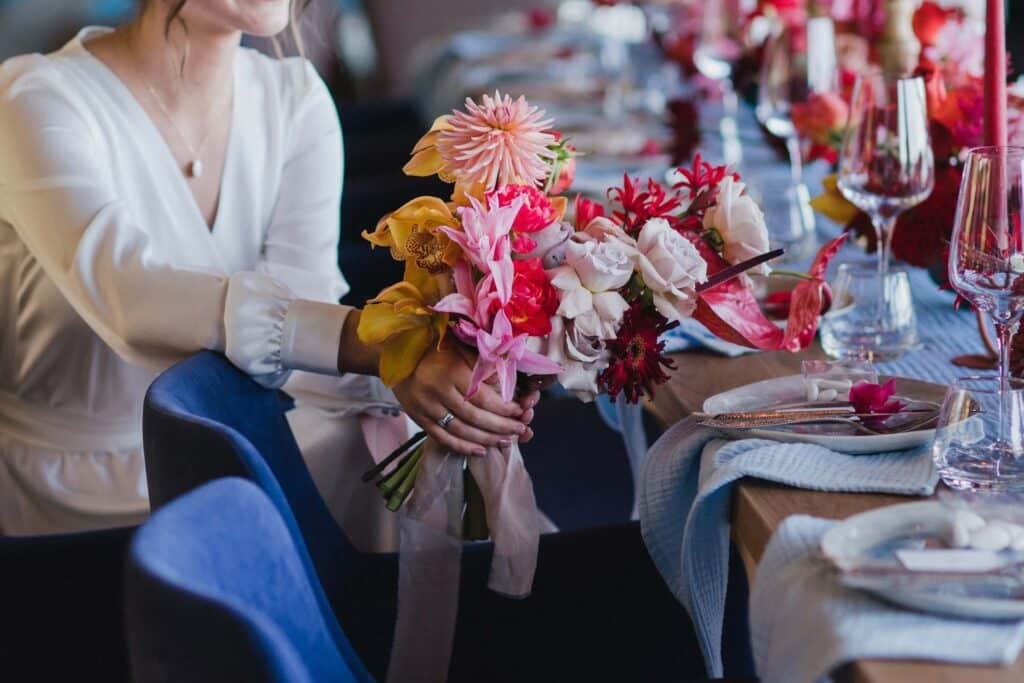
For venue owners, demand doesn’t always feel like it used to. The experience can make it hard to tell whether demand itself is slipping or just showing up differently.
Demand for wedding services is still very real, but it’s moving in ways that reward clarity, flexibility, and faster decision support. Here’s how that demand is changing in practice:
1. The overall market is still active
People continue to choose weddings as a way to mark major life moments. That demand shows up across a wide range of celebration styles rather than one dominant format. Instead of a single “default” wedding type, demand now spreads across different sizes, locations, and levels of formality.
2. Couples care more about the experience than the formula
Many couples now enter planning with a stronger sense of what they want and what they don’t. That clarity often comes from exposure to examples, conversations with peers, and access to information early on. As a result, interest tends to surface later in the process but with more confidence behind it.
3. Planning timelines feel shorter because decisions happen faster
Across industries, people make decisions faster once they feel informed. Weddings follow that same pattern. Rather than researching slowly over long periods, couples often gather context early and commit once things align. This compresses planning timelines without reducing seriousness or intent.
4. Demand spreads across more dates and settings
Demand no longer concentrates as heavily around a narrow set of dates or traditional seasons. Couples show more openness to weekday events, off-season celebrations, and nontraditional settings that align with availability, schedules, or personal preference.
5. Spending reflects values rather than tradition
Wedding budgets still exist, but they’re guided more by personal values than by inherited expectations. Couples decide where money matters most to them and allocate accordingly.
This creates variation in how demand shows up across services, rather than a uniform spending pattern.
6. Interest often appears closer to the decision point
Many couples spend time thinking privately before reaching out publicly. By the time they inquire or engage, they’re often closer to choosing than in the past. That can make demand feel quieter on the surface while remaining strong underneath.
7. Long-term demand still points upward
Looking ahead, forecasts continue to show ongoing demand for wedding services. The shape of that demand keeps evolving, but the desire to celebrate, gather people together, and mark milestones remains consistent.
For venues, this points to a future where bookings continue, but processes need to support how couples decide now rather than how they used to.
Why Some Venues Feel Steady While Others Feel Stuck

What Does This Mean for Wedding Professionals Heading Into 2026?
As 2026 approaches, it becomes easier to understand what’s really happening when you look at how couples move through decisions instead of how the industry talks about demand. Weddings continue to happen, but the pace has changed, and that shift affects both how leads come in and how bookings actually form.
Couples still care deeply about where they get married. They still spend time imagining the space and picturing themselves there. The friction usually shows up after that initial interest, when the process feels unclear or stretched out compared to how quickly they’re ready to decide.
From our work with venues across the U.S., the most consistent issues tend to fall into two connected areas: generating consistent inquiries and converting those inquiries into booked tours and dates.
Here’s how that usually shows up:
- Communication assumes couples will take longer to decide than they actually do
- Fully Booked Venue is built to address both sides of that equation.
- Venues receive inquiries, but not enough of them arrive consistently month to month
- Couples inquire with real interest, then stall or go quiet before a tour is booked
- Follow-up slows during decision windows where couples are still actively comparing
Fully Booked Venue is built to address both sides of that equation.
On the front end, the system focuses on generating qualified leads through paid media and offers that match how couples research venues today. That means reaching couples early in their planning window and giving them a clear reason to engage, rather than relying solely on directories or passive discovery.
After the inquiry, the focus shifts to conversion. Fully Booked Venue sets up structured follow-up through email and SMS that responds quickly, guides couples toward the next step, and stays present during the decision window. The goal is to reduce uncertainty and keep momentum moving from inquiry to tour to booking.
This approach does not ask venues to change who they are or how they price. It supports the part of the process where most momentum is lost, using systems that match the pace couples already move at.
When venues generate steady inquiries and pair that with consistent follow-through, conversations feel clearer. Tours get booked more reliably. Decisions form without needing pressure or constant manual chasing.
Heading into 2026, that combination matters more than chasing visibility alone.
Conclusion: Is the Wedding Industry Dying?

When inquiries feel uneven, timelines shrink, and couples move in unfamiliar ways, it is natural to pause and reassess what is happening. In many ways, the environment has shifted. The shift simply looks different than the word “dying” suggests.
Weddings continue to take place. Couples still care deeply about where they get married. What changed is how quickly decisions form, how much clarity feels necessary early on, and how little patience exists once interest appears.
For many venues, the tension heading into 2026 comes down to timing. The pace changed quietly, and not every process adjusted at the same speed.
This is where Fully Booked Venue fits.
The focus is on generating steady inquiries and supporting couples after they reach out, using clear follow-up and communication that matches how quickly decisions happen now.
Venues that pair consistent demand with systems built for this pace are positioned to move through 2026 with more confidence, fewer stalled conversations, and a steadier booking rhythm across the year.
Key Takeaways
- The wedding industry continues to operate within a different planning pace
- Smaller guest counts and shorter timelines often align with decisive couples
- Uneven inquiry flow does not automatically indicate reduced interest
- Many booking challenges surface after the initial inquiry
- Clear positioning supports faster decision-making
- Consistent communication carries more weight than inquiry volume
- Timing changes affect confidence more than venue quality
Frequently Asked Questions
Is the wedding industry actually declining in 2026?
The industry continues to operate, but the way couples approach wedding plans looks different than it did a few years ago. Guest counts trend smaller, timelines move faster, and expectations around communication have shifted. Many wedding vendors are still seeing steady demand, even if activity does not mirror normal levels pre pandemic. The perception of decline often comes from comparing today’s patterns to older benchmarks rather than current behavior.
Why do inquiries feel inconsistent even when bookings still happen?
What many venues experience is less about disappearing interest and more about timing gaps. The pause between engagement and booking has widened in some cases, creating what feels like a wedding gap. A similar engagement gap shows up when couples reach out, go quiet, and then return ready to decide. Planning now happens in shorter bursts, often shaped by schedules, availability, and a desire to leave room for spontaneous moments, which can make inquiry flow feel uneven.
What types of weddings are shaping demand heading into 2026?
Couples continue to explore a wider range of options, including destination wedding experiences, micro weddings, and celebrations hosted at unconventional venues. At the same time, costs have shifted as vendors raised pricing to reflect changes in the market. Many couples balance those realities with personal values, including interest in sustainable celebrations, while keeping close attention on financial priorities. These choices influence how quickly decisions form and what couples look for from venues early on.
Why do weddings feel so different now compared to a few years ago?
For many venue owners, the shift comes down to how couples approach planning in the context of broader social trends that gained momentum in recent years. Some of that change was pandemic caused, reshaping how people gather across the world, especially during periods of travel restrictions. Those conditions pushed creativity forward, opening the door to alternative forms of celebration that did not always revolve around a packed dance floor. Smaller gatherings with close loved ones and trusted friends became more common, and that preference has lingered even as conditions changed. Compared to the past, weddings now reflect flexibility and intention more than strict tradition.
How are newer generations influencing wedding decisions today?
Many wedding pros have noticed that many vendors now field questions that originate on social media, which often serves as the go to place for inspiration. Generation z in particular shows interest in shaping events around personal values, often opting for ideas that feel more reflective of daily life. That includes choices tied to eco friendly practices and broader environmental awareness, as well as a desire to highlight individual love stories over formal expectations. Budget conversations also look different, with money viewed as something to allocate thoughtfully rather than stretch for tradition’s sake.