This might sound familiar: your tour calendar looks healthy, the right couples are walking through the door, and most of the tours seem to go well. You answer their questions, show them the spaces they came to see, and get the sense that they can picture their wedding there.
Then the bookings come in inconsistently.
One couple is ready to move forward within a day or two. Another seems every bit as interested, talks through the same kinds of details, and then goes quiet. After enough of those, it is hard not to wonder what you are missing.
That is usually the point where venue owners start second-guessing the tour itself. Did pricing come up at the wrong time? Did the visit end too casually? Was there a concern that never got addressed? Did the follow-up take too long?
The problem is that those issues can be hard to spot while you are in the middle of running tours every week.
If your tours are not converting into bookings as consistently as you would like, this is where to start evaluating the process. We recommend looking closely at two areas: how the tour is structured and what happens during the first 72 hours after the couple leaves.
In this guide, we’ll show you what to review, which patterns to look for in your wedding venue tour close rate, and where small changes can make the booking process more consistent.
Start With Your Tour-to-Booking Rate
Before changing anything, you need to know what your current numbers actually say. Your tour-to-booking rate is simple:
Booked weddings ÷ completed tours × 100
If you completed 20 tours and 8 of those couples booked, your tour-to-booking rate is 40%.
What Is a Healthy Tour-to-Booking Rate?
Industry benchmarks generally put the average wedding venue tour-to-booking rate around 30% to 40%, while stronger-performing venues can reach 40% to 50% and some report conversion rates of 60% or higher.
That means a venue closing four out of every 10 tours is not necessarily underperforming. At the same time, regularly converting half or more of the couples who tour is realistic for some venues, particularly when those couples are already well-qualified before they arrive.
If your rate is lower than you want, the next step is figuring out what is actually happening during the visit. That starts with the way the tour is structured.
Make Sure Your Tours Are Structured the Right Way
One thing we consistently see at venues that close tours well is that the experience is more intentional than it looks.
The couple may feel like they are having a relaxed conversation and walking the property at their own pace, but the person giving the tour usually has a clear plan for how the visit should unfold. They know what they want to learn before the tour starts, which spaces to show first, when pricing should come up, and how to end the visit without letting the conversation fizzle out.
That does not make the tour feel scripted. It gives the couple a more consistent experience and makes it easier for your team to repeat what is working.
Here’s what we’ve seen work well:
1. Start With Their Wedding
Spend a few minutes talking about their wedding before you start moving through the venue.
You probably already know the guest count and preferred date from the inquiry, but the conversation in person usually gives you a much better read on what the couple actually cares about.
Ask what matters most to them, what they have liked or disliked at other venues, and what questions are still sitting in the back of their minds.
That should shape where you spend your time.
A couple worried about rain will want more detail when you reach the backup ceremony space. Someone focused on guest convenience may care more about parking, room transitions, nearby lodging, or how far people need to move throughout the day.
The tour works better when the property is explained through the wedding they are already trying to picture.
2. Show the Property in an Intentional Order
The route through the venue matters more than it may seem.
A lot of tours simply follow the building. You start with the room closest to the entrance, move to whatever is nearby, and keep going until every space has been shown.
That may be easy for the person giving the tour, but it can leave the couple trying to piece together how the wedding would actually flow.
A better route usually follows the day itself.
For some venues, that might look like:
Welcome and initial conversation → ceremony → cocktail hour → reception → getting-ready spaces → weather backup → pricing and package discussion
At the ceremony space, explain how guests arrive and where the wedding party enters.
As you move into cocktail hour, talk through where guests go while photos are happening and how that transition usually works.
When you reach the reception area, help the couple picture their guest count in the room and how dinner, dancing, and the rest of the evening fit together.
By the end of the tour, they should understand how the wedding moves through the property rather than remembering a collection of separate rooms.
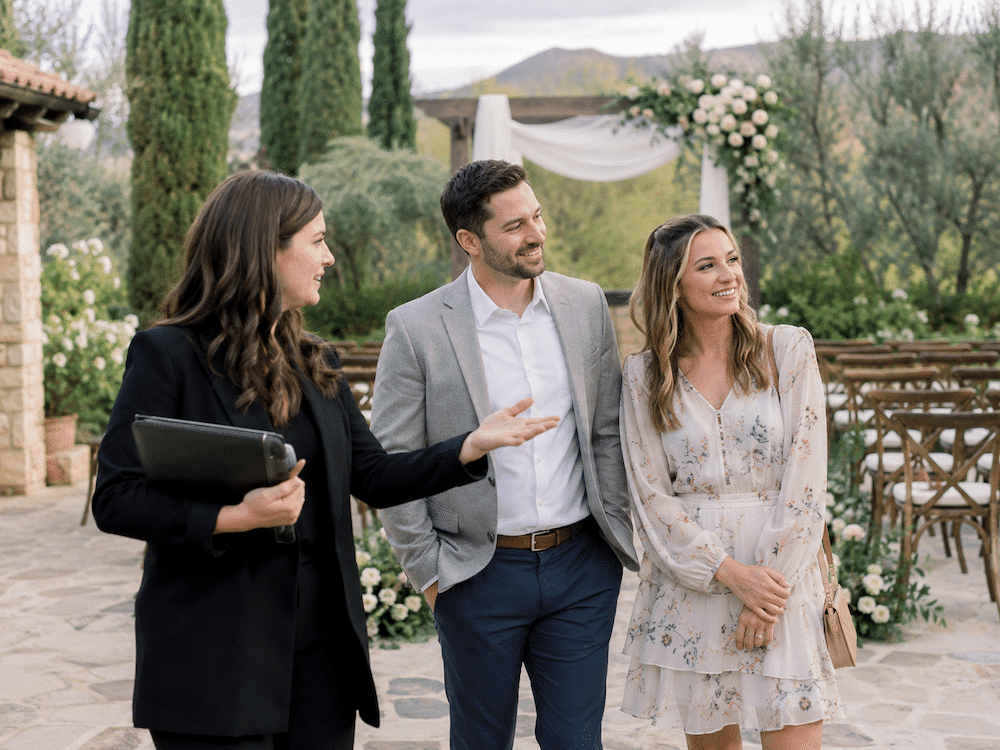
3. Pay Attention to What Else Is Happening on the Property
Couples notice what is happening around them while you are talking.
A vendor may be unloading near the entrance. Staff may be resetting tables in a hallway. Another couple may be waiting nearby for their own appointment. A room you normally show may be closed because someone is setting up.
Those situations are part of running a working venue, especially on Saturdays. They still shape the visit.
Think about what a couple is likely to encounter before the tour begins. Let staff know where the tour will be moving, make sure important spaces are open, and avoid having multiple tours repeatedly cross paths if you can.
A couple may never mention that the reception room felt dark or that they walked past stacks of chairs on the way to the ceremony space. They still noticed it.
4. Bring Pricing Into the Conversation at the Right Time
Pricing usually works best once the couple has enough context to understand what they would actually be paying for.
At that point, they have seen how the property fits their wedding, heard what is included, and probably have a sense of which package makes the most sense.
That gives the number context.
Package clarity matters too. If the couple leaves needing to compare several similar options, calculate add-ons, remember which fees apply, and work out the likely total at home, you have made the decision more difficult.
They should leave with a solid understanding of which package fits their wedding and roughly what that choice will cost.
5. Do Not Let the Tour Fade Out at the End
The end of the tour is often where the conversation gets loose.
Everyone has seen the property, the main questions have been answered, and the group starts heading back toward the entrance. A friendly “let us know if anything comes up” can easily become the last thing said.
Use those final few minutes to find out what the couple is still thinking about.
You could ask what they are comparing between venues, whether anything still feels unclear, or what they expect to talk about once they get home.
You may hear a concern that never came up earlier in the visit. Maybe they are still unsure about the rain plan, want a parent to see the space, or need a clearer picture of the payment schedule.
It is much easier to talk to a lead that while they are still standing in front of you.
Before they leave, they should also know what happens next. Tell them when the proposal will arrive, how a date hold works, or what to expect if they want to come back for another visit.
That handoff matters because the decision does not stop when the tour ends. Once the couple gets back in the car, they are already talking through what they saw, what they liked, and what still feels unresolved. This is where your broader wedding business lead nurturing process starts to matter, because the conversation you continue after the tour can influence what happens next.
A Practical 72-Hour Follow-Up Sequence
The first few days after the tour can have a lot of influence on what happens next.
They may be comparing notes on the drive home, sending photos to family, opening the pricing guide later that night, or getting ready to tour another property the next morning.
Your follow-up should meet them while the visit is still fresh and give them a clear path forward. Here’s how to handle your follow-up:
Before They Leave
Confirm the date they are considering, which package seems relevant, any questions that still need an answer, and what you plan to send after the visit.
Same Day
Send a personal message tied to something you discussed during the tour.
If you promised pricing, a proposal, a payment schedule, photos, or another resource, get it into their hands as soon as you can.
Within 24 Hours
Check that they have what they need to compare the venue seriously.
That may include the proposal, package details, floor plan, contract, or answers to questions that came up during the visit.
Within 48 to 72 Hours
Reach back out with a reason.
Ask whether anything came up while they were reviewing the package, answer something they were still considering, or check in on the date they discussed.
“Just checking in” rarely gives the conversation anywhere to go and certainly doesn’t turn these real inquires into bookings.
Compare the Tours That Book With the Tours That Do Not
Once you are running tours in a more consistent way, start comparing what happened around the visits that turned into contracts.
Memory tends to hang onto the obvious parts of the conversation. You remember that they loved the courtyard or seemed excited about the bridal suite. It is harder to remember whether the proposal went out three hours later or the following afternoon.
Track those details.
Below, we’ve included a downloadable form to make this easier:
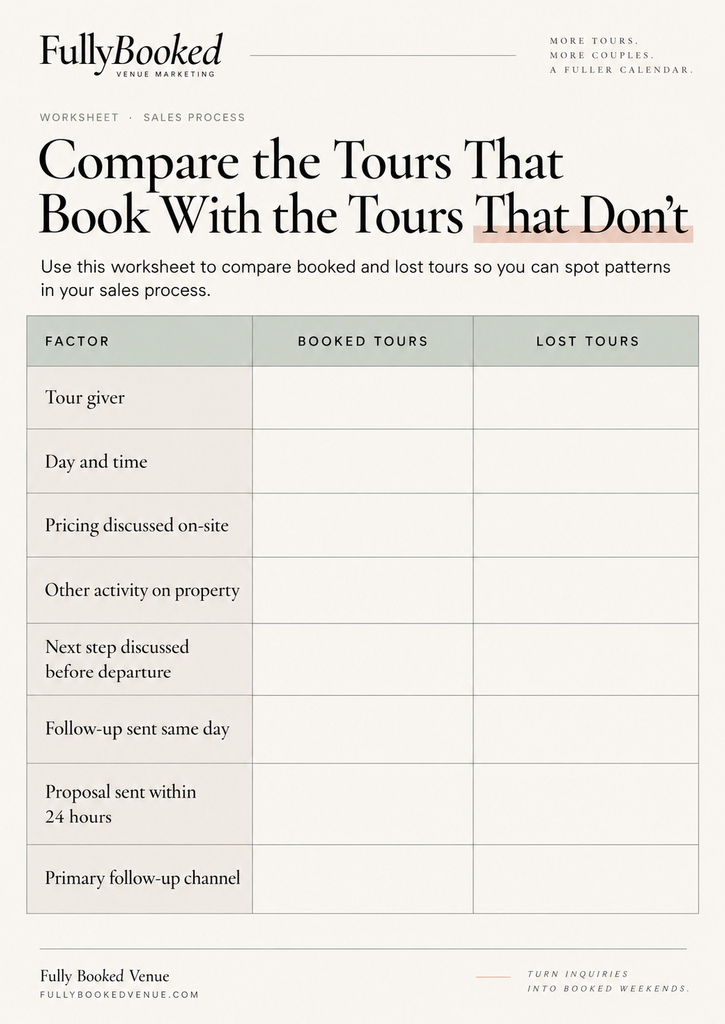
Give yourself enough tours to see something meaningful before drawing conclusions.
If one salesperson appears to close more often, listen to how that person handles the visit. If same-day proposals keep appearing alongside bookings, look at how quickly the rest of the team is getting theirs out.
If tours during active setup repeatedly seem weaker, spend some time thinking about what those couples are seeing and hearing while they are there. The table is there to help you spot questions worth investigating.
Conclusion: How to Improve Venue Tour Close Rate
Some couples will choose another venue for reasons you cannot do much about. They may prefer a different location, connect more strongly with another property, or change what they want after they start touring.
The part worth studying is what happens on your side.
When one Saturday produces several bookings and another produces none, look at how those visits actually unfolded. Compare the route through the property, when pricing came up, what the couple saw while they were there, how the tour ended, and what happened during the next 72 hours.
Over time, you should start to see which parts of the process keep showing up around your strongest tours.
That is also where Fully Booked Venue can help. We work inside the lead follow-up, appointment-setting, tour-scheduling, email, and SMS side of the process, which gives venue owners a clearer view of what is happening around the appointments already on the calendar.
If qualified couples are already touring your venue and the bookings still feel inconsistent, a competitive review can help you see where the process may be losing momentum.
We’ll look at how your venue is positioned, how couples move from inquiry to tour, and what may be getting in the way of more of those visits turning into booked weddings.
Key Takeaways
- Your venue tour close rate is one of the clearest ways to see how well tours are turning into booked weddings.
- Successful venues tend to run tours with a clear structure, including when pricing comes up, how the property is shown, and how the visit ends.
- Couples should leave understanding which package fits, what it costs, and what happens next.
- The first 72 hours after a tour matter because couples are often comparing venues and making decisions quickly.
- Same-day follow-up works best when it references the actual tour and gives the couple something useful to review.
- Comparing booked tours with lost tours can reveal patterns around tour giver, timing, property activity, pricing conversations, and follow-up.
- Fully Booked Venue helps venue owners track the path from inquiry through tour and follow-up so they can see where strong opportunities are losing momentum.
Frequently Asked Questions
What is a normal tour-to-booking rate for a wedding venue?
A normal tour-to-booking rate is often around 30% to 40%, with stronger-performing venues reaching roughly 40% to 50% and some exceeding 60%. Your own baseline matters too, especially if you start seeing a noticeable drop from what your venue normally converts.
How fast should you follow up after a tour?
Send the first follow-up the same day, ideally while the visit is still fresh. A short, personal text can reference something discussed during the tour, while proposals, pricing, floor plans, or package details can follow by email. Any promised information should be sent within 24 hours, with another meaningful touchpoint within the first 48 to 72 hours.
When should price come up on a tour?
Pricing usually makes the most sense after the couple has seen enough of the venue to understand what they would be paying for. By that point, they should have seen the key spaces, heard what is included, and have a sense of which package fits their wedding. They should leave the tour knowing the likely package and approximate cost rather than having to piece everything together at home.