
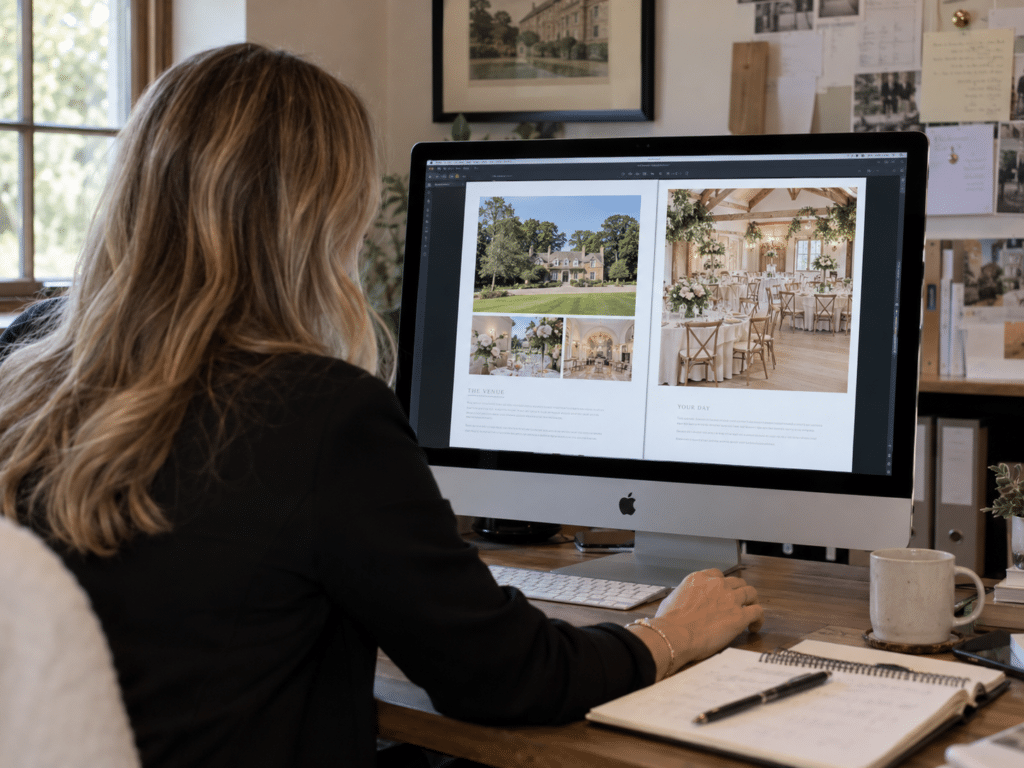
A couple reaches out about your wedding venue, schedules a tour, and spends an hour walking through the property. They love the ceremony space, ask about Saturday availability, and seem genuinely excited about getting married there.
Then you send over the pricing.
A few days pass, and you get a polite email explaining that the venue is outside their budget.
It’s frustrating, especially when you’ve put time into preparing for the tour, answering questions, and helping them picture their wedding day.
Some of these situations are unavoidable. But if couples regularly tour your property without understanding the pricing, capacity, or what’s included, there’s a good chance your wedding venue brochure could be doing more of the work upfront.
A useful brochure gives couples enough information to decide whether your venue is a realistic option before they visit. It also gives your team a better starting point for the conversation when they arrive.
Here’s what to put in yours and how to use it to support more productive venue tours.
Why Your Wedding Venue Brochure Matters Before the Tour
Think about what a couple is trying to figure out when they first inquire about your venue.
They’ve probably looked through your gallery, checked the location, and decided they like what they’ve seen. Now they need to understand the details.
Can the property accommodate their guest list? Does the rental include tables and chairs? Can they bring their own caterer? And, perhaps most importantly, does the venue fit their budget?
Your brochure should help answer those questions.
We see plenty of wedding venue marketing materials that look beautiful but leave couples guessing about the actual rental experience. There are pages of gorgeous photography, maybe a paragraph about the property’s history, and an invitation to schedule a tour.
The problem is that couples still need to contact someone to find out the basics.
That makes it harder for them to compare venues and leaves your team answering the same questions during every tour.
Here’s how the two approaches compare.
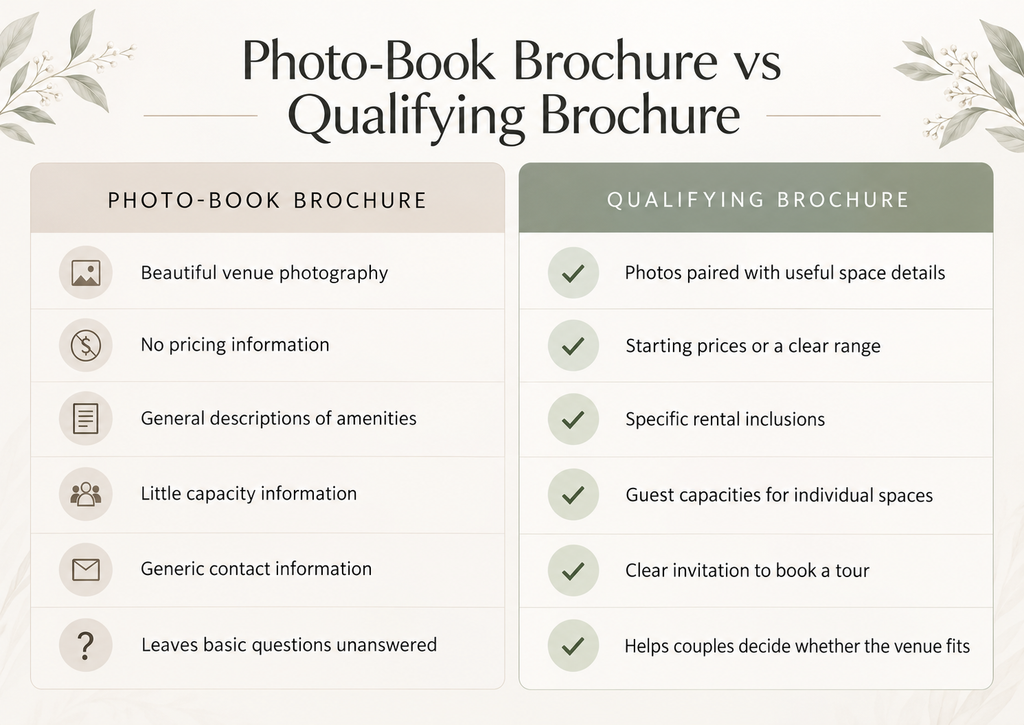
The goal is to help couples arrive at their tour with a good understanding of what your venue offers.
That matters when you’re trying to improve your venue tour close rate. The more time you spend explaining basic rental information during a tour, the less time you have to discuss the wedding the couple actually wants to plan.
The 7 Sections Every Wedding Venue Brochure Should Include
At Fully Booked Venue, we use pricing and planning guides as part of the inquiry process for the venues we work with.
These guides bring together the information couples need to understand the venue and decide whether they’d like to visit.
We recommend organizing a qualifying wedding venue brochure around seven sections.
The order matters, too. Start with what makes the property appealing, give couples the practical details they need, and finish with a clear invitation to schedule a tour.
1. Introduce Your Venue With One Strong Photo and a Clear Description
Your cover should give couples an immediate sense of the property.
Choose a photo that represents the experience they’re interested in. For most venues, that means a strong image of the ceremony space, reception setting, or another recognizable feature.
Pair it with a short description that answers a few basic questions: What kind of venue is this? Where is it located? What makes it appealing?
For example:
“A private countryside wedding venue in Central Texas with indoor and outdoor celebration spaces for up to 150 guests.”
That’s enough to give someone useful context.
You can share more of the property’s personality throughout the brochure. The cover doesn’t need several paragraphs explaining how the venue was founded or why the owners fell in love with it.
2. Show Your Spaces and Guest Capacities
Couples need to picture how their wedding will work at your property. Give each major space its own photo and a short description of how it can be used.
Depending on your venue, this might include:
- Indoor and outdoor ceremony locations
- Reception halls or event rooms
- Cocktail hour spaces
- Bridal suites and getting-ready areas
- Covered areas or weather backup options
- On-site lodging or additional gathering spaces
Include guest capacities wherever they’re relevant.
For example:
“Our reception hall accommodates up to 150 seated guests, with an adjacent courtyard available for cocktail hour.”
If your ceremony lawn accommodates 200 people but your indoor reception space seats 120, make that distinction clear.
A couple planning a 175-person wedding needs to know that before they schedule a tour.
This is also a good place to explain how the spaces work together. A simple overview of where the ceremony, cocktail hour, and reception typically take place can help couples picture the flow of their day.
3. Explain Exactly What’s Included
This is one of the most useful parts of a wedding venue brochure, particularly when couples are comparing several properties with different rental packages.
One venue might include tables, chairs, linens, and setup. Another might provide the building and outdoor spaces, leaving the couple responsible for most rentals.
Without that information, comparing prices becomes difficult. Spell out what comes with the rental. Depending on your property, that could include:
- Tables and chairs
- Getting-ready suites
- Indoor and outdoor ceremony options
- Venue access hours
- Setup and cleanup
- Kitchen or catering facilities
- On-site coordination or venue staff
- Parking
- Decor or other available amenities
You can organize these into a simple checklist instead of a long paragraph. Here’s an example of how that copy could read:
“Your venue rental includes 10 hours of property access, tables and chairs for up to 150 guests, two private getting-ready suites, and access to both ceremony locations.”
Be specific about anything that requires an additional fee.
If cleanup is included but decorating is the couple’s responsibility, say so. If your venue provides a coordinator who handles property logistics but doesn’t offer full wedding planning, explain the distinction. Clear expectations here can save a lot of questions later.
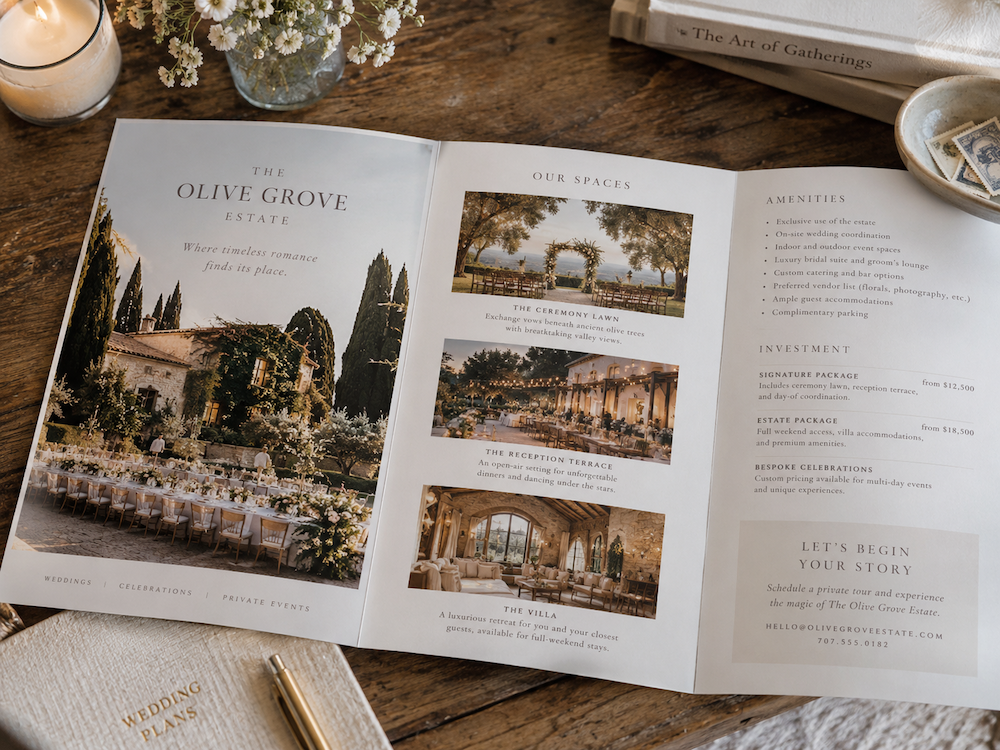
4. Include a Starting Price or Pricing Range
Let’s talk about the part many venue owners are hesitant to include.
Pricing.
Some owners prefer to wait until a couple tours the property before discussing cost. The thinking is understandable. Once someone sees the venue in person, they may appreciate its value more.
But consider what happens when a couple with a $4,000 venue budget schedules a tour at a property where Saturday rentals begin at $9,000. They could absolutely love everything they see. The budget difference is still there.
Pricing transparency matters when people are comparing their options. Research published in the Journal of Consumer Policy explains how unclear pricing can make it harder for consumers to make informed purchasing decisions. For couples comparing wedding venues, a starting price gives them one more piece of information they need before deciding which properties to tour.
A brochure without a price can move the discovery conversation to Saturday, when you’ve already committed time to the tour.
You don’t need to include every package variation or optional upgrade. Give couples a realistic starting point so they can decide whether the venue is within reach.
For example:
| Rental Day | Starting Price |
|---|---|
| Saturday | $7,500 |
| Friday | $6,000 |
| Sunday–Thursday | $5,500 |
Illustrative pricing only.
You can also give a range if your rates vary significantly by season, guest count, or rental duration.
The important thing is explaining what the price represents. Does it cover a full-day rental? Is it a ceremony-only package? Are tables and chairs included? Are there additional required fees?
Couples should be able to understand the approximate investment without having to request a separate quote just to get started.
If you’re concerned that publishing your starting rates will discourage inquiries, consider which inquiries you’re worried about losing.
Couples whose budgets are substantially below your minimum rental price are unlikely to book without a meaningful change in their plans. Couples who can realistically afford the venue now have the information they need to move forward.
And if you’re reconsidering your rates, our guide to how to raise wedding venue prices covers how to approach that decision.
5. Explain Date Availability and Booking Policies
Wedding dates are often one of the first things couples want to discuss.
Your brochure doesn’t need a constantly updated calendar, although you can link to one if your venue maintains it. Instead, explain how availability works and what couples should expect when they’re ready to inquire about a date.
For example:
“We host weddings throughout the year, with Friday, Saturday, and Sunday rental options. Contact our team to check availability for your preferred date.”
You can also briefly explain how the booking process works. How long can a date be held? Is a deposit required to reserve it? When is the remaining balance due?
You don’t need to reproduce your entire contract. A few lines about how dates are reserved can answer important questions and make the next step feel straightforward.
If you offer different experiences by season or day of the week, this is also a useful place to mention them.
6. Include a Review From a Real Couple
Couples want to know what getting married at your venue is actually like.
Your photography shows them the property, and your package details explain the rental. A review gives them some insight into the experience of working with your team.
Choose a testimonial that says something specific. A couple describing how the staff handled unexpected rain, helped coordinate vendors, or made the planning process easier tells a more useful story than a review that simply says the venue was beautiful.
Keep it short enough that someone will actually read it, and use the couple’s own words with permission. You can also pair the review with a real wedding photo, especially if the testimonial references a particular space or part of the wedding day.
There’s no need to fill several pages with testimonials. One strong review can do the job.
7. Give Couples One Clear Next Step
Once someone reaches the end of your brochure, what do you want them to do?
For most venues, the answer is schedule a private tour. Make that invitation clear and easy to act on. For example:
Ready to See the Venue in Person?
“We’d love to hear more about your wedding plans and show you around the property. Schedule a private tour to explore the spaces, ask questions, and talk through your preferred date.”
Button: Schedule Your Private Tour
Include a working booking link or clearly explain how to request an appointment.
Avoid ending the brochure with several competing options, such as requesting another quote, calling the office, completing a second inquiry form, and visiting your social media profiles. The couple has already shown interest. Give them a straightforward way to continue the conversation.
How Long Should a Wedding Venue Brochure Be?
There’s no required page count, and a property with several ceremony spaces, lodging options, and weekend packages will naturally need more room than a smaller venue with one rental package.
As a practical starting point, consider somewhere around 8 to 16 pages. Some venues will need fewer, and more complex properties may need additional pages. Pay more attention to whether the information is easy to find.
Use real, high-quality venue photography, clear headings, readable text, and enough space around pricing and package details that they don’t get lost.
Since many couples will open the brochure on their phones, check how the PDF looks on a small screen before sending it out. Digital PDFs work well for inquiry responses, while printed brochures can still be useful during open houses, wedding expos, and in-person tours.
When and How Should You Send Your Wedding Venue Brochure?
Timing matters almost as much as the information inside the brochure.
If someone reaches out asking about pricing, they probably don’t want to wait two days for a response telling them to schedule a phone call.
Make your pricing and planning guide available early in the inquiry process.
At Fully Booked Venue, we often use guides as the resource couples receive after completing an inquiry form on a venue’s landing page. This gives them the information they’re looking for while giving the venue an opportunity to continue the conversation.
You can also send the brochure directly when someone asks about pricing through your website, email, or text. Either way, the process should feel easy for the couple.
Make sure the guide arrives promptly, the link works, and the file opens comfortably on mobile. It’s also worth including a short message explaining what they’ll find inside. For example:
“Thanks for reaching out! I’ve attached our pricing and planning guide so you can see the spaces, what’s included, and our starting rates. If everything looks like a good fit, we’d love to show you around. Here’s where you can schedule a private tour.”
That’s a useful response because the couple gets the information they requested and knows how to move forward.
For more ideas on handling inquiries, take a look at our guide on how to convert wedding inquiries into bookings.
What Happens After You Send the Brochure?
Sending the brochure is one part of the inquiry process. You’ll still need to follow up with couples who haven’t booked a tour.
Some people will open the guide immediately and schedule an appointment. Others will save it, discuss the options with their partner, or continue comparing venues. A thoughtful follow-up gives them an opportunity to ask questions without feeling pressured.
For example, you might send a message the next day:
“Hi Sarah! Just checking that you received our venue guide yesterday. Did you have any questions about the packages or what comes with the rental? Happy to help if there’s anything you’d like me to explain.”
If the couple doesn’t respond, you can follow up again a few days later with an invitation to tour or ask about date availability. Keep the conversation relevant to what they initially asked about.
Someone who inquired about a December wedding might appreciate information about your indoor ceremony options. A couple planning a large celebration may be interested in how you arrange the reception space for their guest count.
We cover the timing and messaging in more detail in our wedding business follow-up strategy.
Conclusion: Your Brochure Should Help Set Up the Tour for a Booking
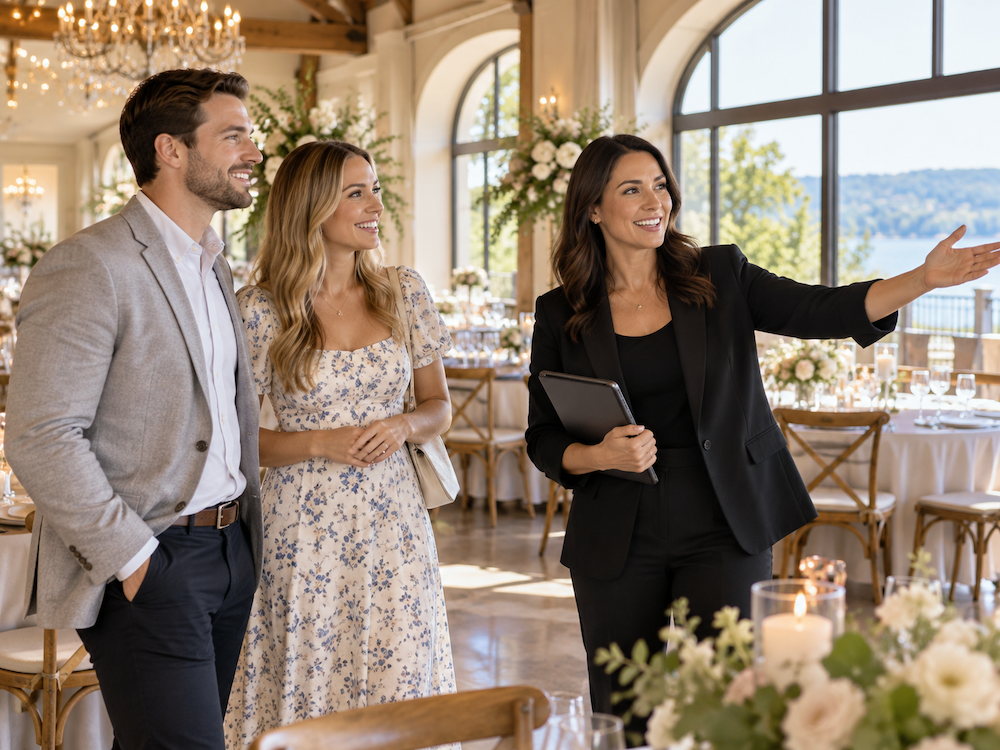
A wedding venue tour is a significant time commitment for your team. There’s the scheduling, property preparation, walkthrough, and follow-up afterward. Ideally, the couples taking that time already have a reasonable understanding of your pricing, packages, spaces, and policies.
That gives you room to have a more meaningful conversation when they’re standing on the property.
You can talk about their wedding plans, show them how their ceremony could work, answer specific questions, and help them decide whether they’d like to reserve a date.
At Fully Booked Venue, we build pricing and planning guides into the marketing and inquiry process for the venues we work with. The goal is to get useful information in front of couples early and make it easier for interested couples to schedule tours.
If your venue is getting inquiries and tours but you’re disappointed with how many turn into bookings, we’d be happy to take a look at what’s happening.
Book a Fully Booked Venue Competitive Review to discuss your current marketing, inquiry process, and opportunities to book more weddings.
Key Takeaways
- A wedding venue brochure should help couples understand the property, rental options, and general pricing before they schedule a tour.
- Include venue photography, guest capacities, rental inclusions, starting prices, booking details, and one clear next step.
- Sharing a starting price or pricing range helps couples decide whether your venue is a realistic option for their budget.
- Send the brochure early in the inquiry process and follow up with couples who haven’t scheduled a tour.
- Fully Booked Venue uses pricing and planning guides as part of its marketing approach to helping venues generate inquiries and book tours.
Frequently Asked Questions
What should a wedding venue brochure include?
A wedding venue brochure should include an introduction to the property, photos of the ceremony and reception spaces, guest capacities, rental inclusions, starting prices or pricing ranges, booking information, a real couple testimonial, and a clear invitation to schedule a tour.
Should a wedding venue brochure include prices?
Yes, we recommend including at least a starting price or pricing range. This gives couples a realistic understanding of the rental investment before they schedule a tour. If rates vary by season or day of the week, include those differences and explain what each starting rate covers.
What is a wedding venue brochure also called?
Wedding venues may call these resources pricing guides, wedding packages, venue information packets, or wedding planning guides. The names vary, but they typically provide details about the property’s spaces, amenities, rental packages, pricing, and booking process.
Is a digital or printed wedding venue brochure better?
For responding to inquiries, a digital brochure is generally more practical because it can be emailed, texted, or delivered automatically after someone completes a form. Printed brochures are useful during open houses, wedding expos, and in-person appointments. Many venues can use the same core content in both formats.