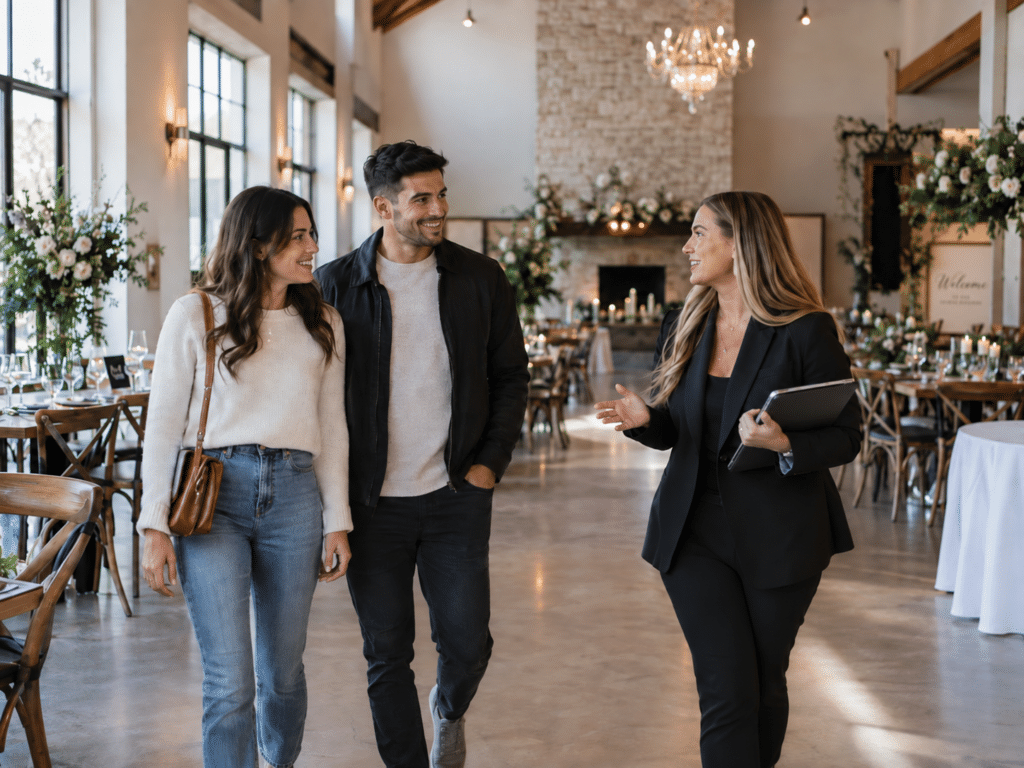
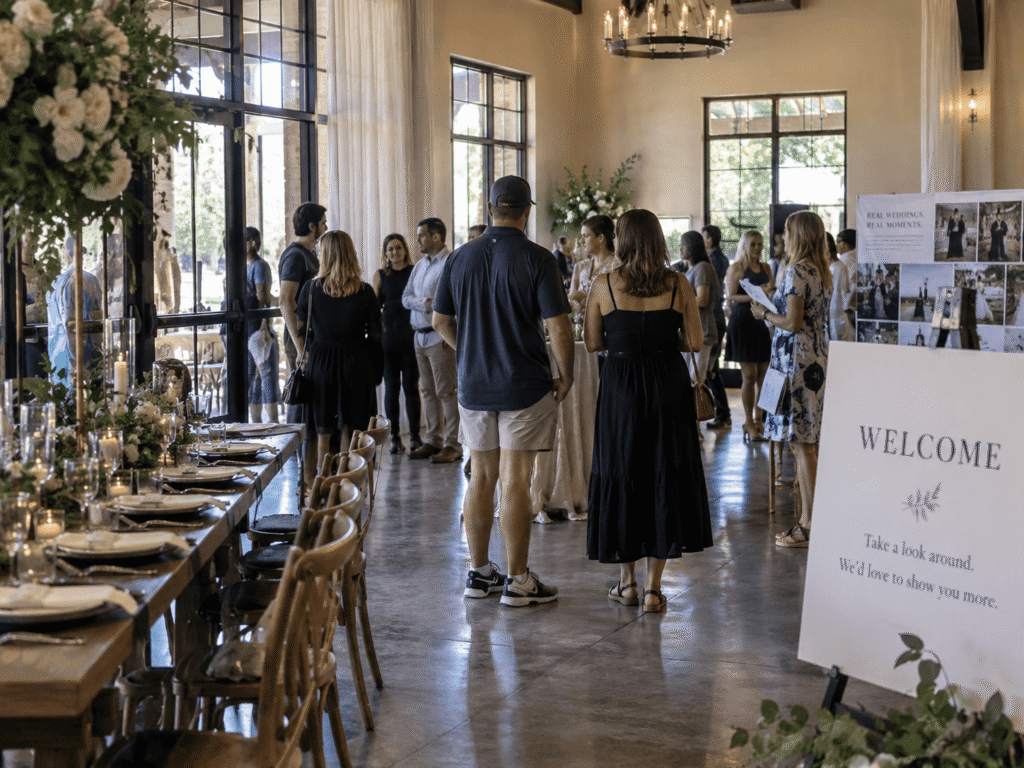
A wedding venue open house can put dozens of interested couples inside your property in a single afternoon.
That alone does not make the event valuable.
The value comes from what happens around it: who you invite, how the venue is presented, what couples are asked to do while they are there, and how quickly your team follows up afterward.
A well-run open house gives couples a chance to see the venue dressed for a wedding, meet people they may work with, ask questions, check availability, and picture their own day taking place there. For the venue, it creates a concentrated window to reconnect with warm leads and move interested couples closer to a tour, date hold, or signed contract.
This wedding venue open house playbook covers the full timeline, from three to four weeks before the event through the first 72 hours afterward.
Why One Great Open House Can Produce More Movement Than Weeks of Outreach
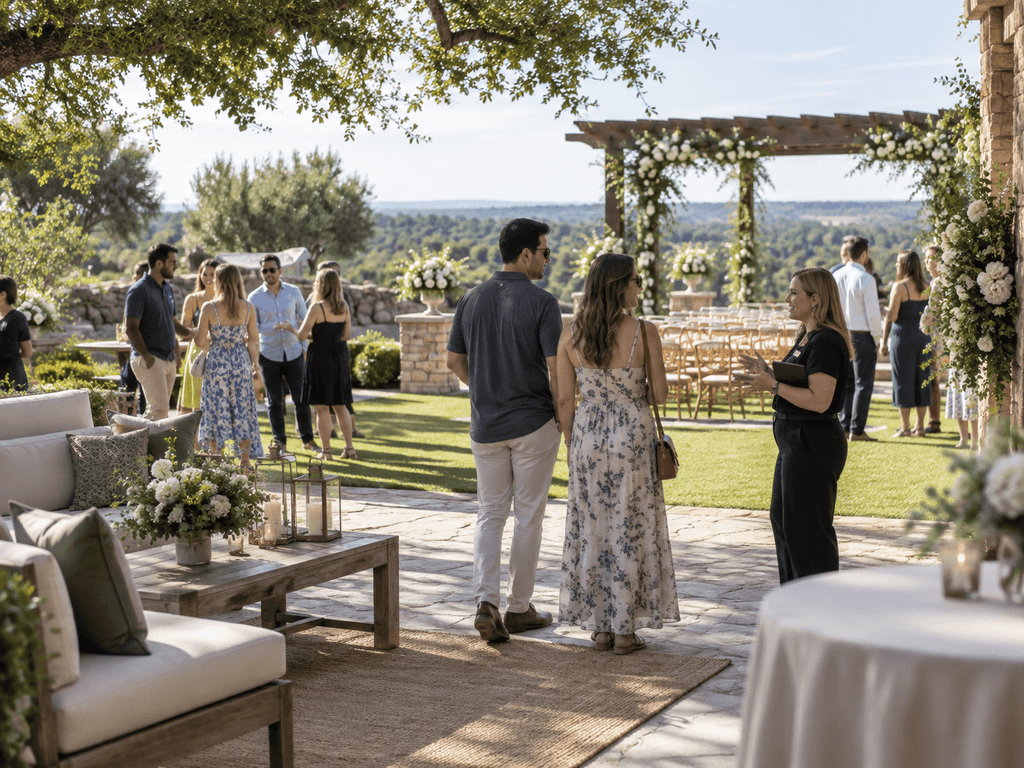
Wedding venue sales usually happen one couple at a time.
A lead downloads your pricing guide. Someone replies to an email. Another couple tours on Saturday. Someone else disappears for two weeks and suddenly comes back asking whether October 17 is still available.
An open house puts many of those conversations in the same place at the same time.
Couples who have already looked at your website, followed you on Instagram, downloaded information, emailed the venue, or toured months ago have a reason to come back and see it again.
There are several reasons that concentration can be useful.
First, the venue becomes tangible.
Photos and videos can show the property well, especially when your wedding venue website has strong photography and clear information. Seeing a ceremony setup in person is different. Couples can stand at the aisle, walk into the reception room, see the tables dressed, hear music in the space, and understand how the property feels when it is ready for a wedding.
Second, vendors add another layer of credibility.
A florist arranging centerpieces, a DJ playing in the reception space, or a planner talking through the flow of the day gives couples a better sense of what their own wedding could look like.
Third, an open house creates a natural reason to talk about dates.
If several couples are interested in similar months or weekends, availability becomes a real part of the conversation. You do not have to manufacture urgency. You can show couples what is open and let the calendar speak for itself.
That makes the open house especially useful when the venue wants to generate bookings during a slower sales period. It can pair well with a broader wedding venue off-season booking strategy when the event is built around specific dates or seasons you want to sell.
Set the Outcome Before You Set the Date
Start with one question:
What should happen because of this open house?
The answer determines almost everything that follows.
A venue trying to book first-time tours should build a different event than a venue inviting couples who have already toured and are close to choosing a date.
If the Goal Is More Tours
Your audience should include leads who have shown interest but have never visited.
That could include couples who:
- Downloaded your pricing guide
- Submitted an inquiry
- Asked about pricing or availability
- Followed up once and went quiet
- Engaged heavily with your social content
- Joined your email list
- Started a conversation without booking a tour
The main conversion you want from the open house is a scheduled private tour or consultation.
If the Goal Is More Date Holds or Signed Weddings
Focus heavily on couples already deeper in the buying process.
Invite people who:
- Already toured
- Asked about specific dates
- Requested a proposal
- Discussed packages
- Said they were comparing a short list of venues
- Have remained in the pipeline without making a decision
For this group, you should have availability, pricing, contract information, and deposit details ready.
If the Event Is Primarily for Booked Couples
That becomes a different type of event.
A client open house may focus on planning, vendor introductions, menu questions, décor ideas, layouts, and logistics.
It can be valuable, but its purpose is different from a sales-focused open house.
Define the primary outcome first. That gives the rest of the event a job.
3 to 4 Weeks Out: Fill the Room
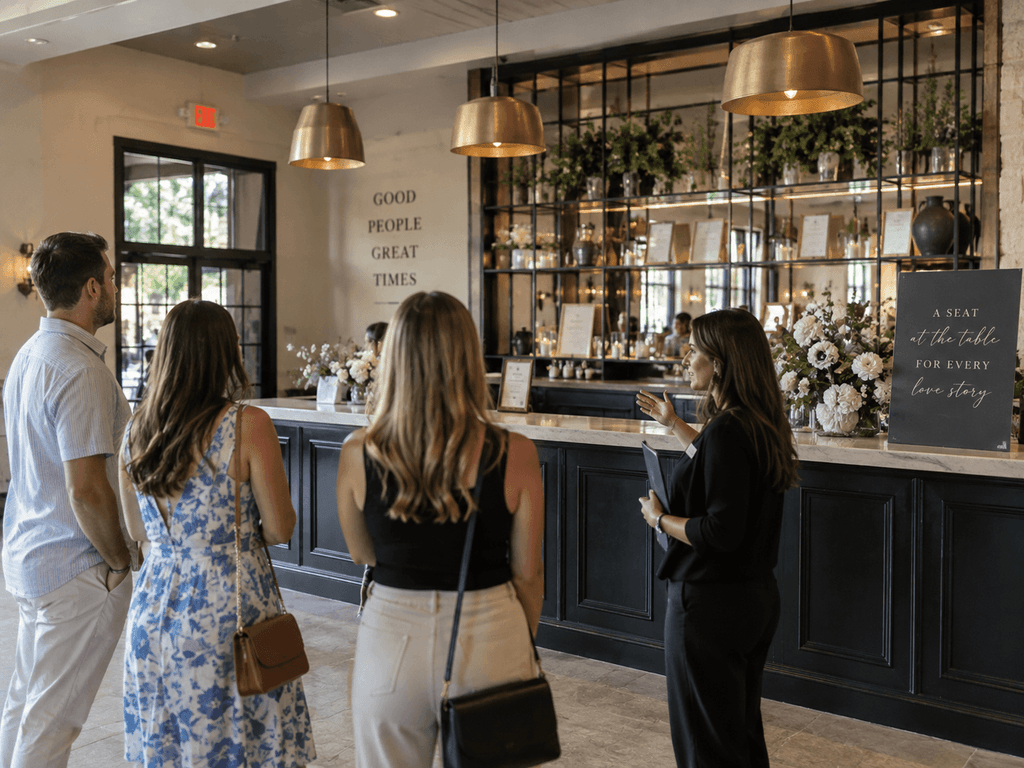
This is where many wedding venue open houses fall short.
The venue prepares tables, calls vendors, schedules staff, orders signage, and posts about the event on Instagram.
Then the team waits for RSVPs.
Promotion needs more attention than that.
If you already have leads sitting in your pipeline, start there.
Pull Every Warm Lead From Your CRM
Look back over the last several months and build an invitation list.
You are looking for couples who showed buying signals but never reached a clear next step.
For example:
- Inquired but never toured
- Opened or clicked emails repeatedly
- Downloaded pricing
- Toured but never booked
- Asked about a date that is still available
- Stopped replying after an active conversation
- Said they were still deciding
- Wanted to revisit the venue with family
These leads already know who you are. Give them a specific reason to come back. A personal message will usually carry more weight than another general announcement.
You might say:
We’re opening the venue on Sunday afternoon and setting up the ceremony and reception spaces so couples can see how everything comes together. Since you had asked about the venue earlier, I wanted to personally invite you.
You can also mention available dates or anything directly relevant to their earlier inquiry.
Promote the Open House Across Several Channels
Do not rely on a single social post. Build a short promotion window across the channels you already use.
A simple three-week cadence might include:
3 weeks out:
Announce the date and open RSVPs.
2 weeks out:
Show what couples will see, such as a styled ceremony space, vendors, food, drinks, or newly available dates.
1 week out:
Send a reminder and personally follow up with your strongest leads.
2 to 3 days out:
Send RSVP holders the event details and make one final invitation push.
Email, SMS, social, vendor pages, and direct outreach can all contribute.
If you already use automated lead follow-up, add the event to the existing sequence where it makes sense. Your open house should connect with your pipeline rather than live as a completely separate marketing campaign.
Ask Vendors to Invite Their Audiences
Your participating vendors have their own client lists and social followings. Give them a ready-to-share graphic, event details, and RSVP link.
A photographer, florist, planner, caterer, bridal shop, DJ, or rental company may already have engaged couples following them who have not chosen a venue.
Make the invitation easy for vendors to share.
Require a Real RSVP
Use a form. At minimum, collect:
- Couple’s names
- Phone number
- Wedding date or preferred month
- Approximate guest count
- Whether they have already toured
- How they heard about the venue
You now have useful sales information before they walk in. You also have a list you can remind before the event and follow up with afterward.
The Run of Show: Stage a Wedding, Not a Walk-Through
Couples should be able to picture a real wedding while they are there. That means the property needs to feel closer to wedding day than tour day.
That first impression carries real weight. One study of prospective wedding couples found that first impression was the most influential personal factor in venue selection, which gives owners a good reason to show the space at its best during an open house.
Create a Natural Wedding Flow
Think about the order a guest might experience the venue.
For example:
Faux ceremony → cocktail hour → reception → vendor conversations → booking table
Set up the ceremony space with chairs, florals, an aisle, lighting, and anything else that shows the room or property properly.
Stage the reception room with tables, linens, place settings, centerpieces, lighting, and music. If you offer several layouts, choose the one that photographs well and works for a common guest count. You can display alternate floor plans nearby.
Use the Details That Change the Feeling of the Space
A mostly empty reception room rarely makes the strongest impression. Show couples what happens when the space is dressed.
That may include:
- Warm lighting
- Table settings
- Florals
- Candles where permitted
- Lounge furniture
- Bar setup
- Music
- Signage
- Cake display
- Place cards
- Cocktail tables
- Ceremony décor
You do not need to create a six-figure styled shoot. You do want enough detail for someone to stand in the room and imagine their own wedding there.
Give Vendors a Role
Avoid lining vendor tables around the room like a trade show. Place vendors where their work makes sense.
The florist can be near the ceremony or reception installation. The DJ can be set up where dancing would happen. The caterer can serve from the area normally used for cocktail hour. A planner can talk couples through the wedding-day flow. A photographer can display images from real weddings at the venue.
Each vendor should add something to the experience.
Consider Staggered Arrival Times
If your venue can become crowded quickly, offer arrival windows or scheduled mini-tours every 20 to 30 minutes.
This gives your staff more opportunities to have real conversations.
A sample format might look like:
- 1:00 PM arrival
- 1:20 PM guided walkthrough
- 1:40 PM vendor and reception time
- 2:00 PM next arrival group
You can still let guests stay longer afterward. The structure keeps 40 people from appearing at once and receiving very little attention.
Convert Interest While Couples Are in the Room
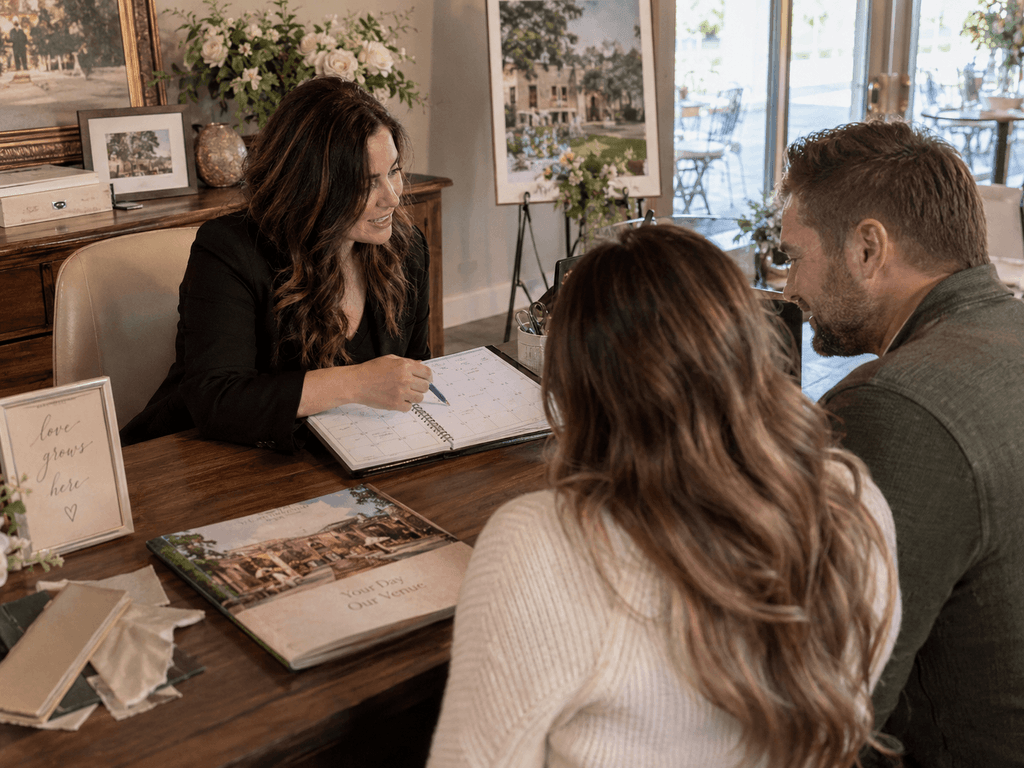
A beautiful open house can still produce very little revenue if nobody asks couples to take a next step. Your team should know what the next step is before the doors open.
Have Availability Ready
Couples will ask. Have a current calendar available, especially for your most requested seasons.
When someone says, “We’re thinking about next October,” your staff should be able to answer with actual available dates.
Have Pricing Ready
You do not want a highly interested couple waiting until Monday for basic information. Keep current package details available.
If you have recently changed or are considering changes to your rates, review your wedding venue pricing strategy before building an open-house offer around pricing.
Give People a Clear Next Step
Depending on the type of lead, that might be:
- Book a private tour
- Schedule a consultation
- Request a proposal
- Place a soft hold on a date
- Submit a deposit
- Sign the agreement
Do not make couples figure out what happens next.
Ask.
- “Would you like me to hold a tour time for you next weekend?”
- “Do you want me to check the dates you’re considering?”
- “Would you like us to put together a proposal for that package?”
Those questions are simple, specific, and easy to answer.
Should You Offer an Open-House Incentive?
You can, but the incentive should support the decision you want couples to make.
Possible incentives include:
- A small booking credit
- An included rental item
- Extra getting-ready time
- A complimentary upgrade
- Reduced ceremony fee
- A bonus tied to booking within a defined period
- A temporary soft hold on an available date
Avoid giving away so much that the event trains couples to wait for discounts.
An open-house incentive works best when it gives interested couples a reason to make a decision they were already close to making.
Capture Every Attendee
Do not rely on RSVPs alone. Plans change. Couples bring parents. Someone attends after hearing about the event from a vendor. A fiancé registers under the other partner’s name.
Check people in.
Capture or confirm:
- Names
- Contact information
- Wedding date
- Guest count
- Tour status
- Venue interest level
- Specific questions
- Preferred dates
- Follow-up action
Those notes matter the next morning.
The 72-Hour Follow-Up That Turns Attendance Into Revenue
The open house is over, but your sales process is not.
The next three days are where the event starts producing measurable results. Every attendee should go back into your CRM with a clear status and next action.
Follow up based on what happened. Do not send the same generic message to everyone. Segment people by signal.
High-Intent Couples
These are couples who:
- Asked about specific dates
- Discussed deposits
- Requested a proposal
- Spent time talking through packages
- Asked detailed planning questions
- Said the venue was one of their final choices
Contact them personally.
Reference the actual conversation. If they asked about May 9, mention May 9. If they loved the courtyard ceremony setup, mention the courtyard. If they wanted to bring their parents back, offer times.
Interested Couples Who Need a Tour
Send them directly to the tour calendar. Make the message specific to the open house.
For example:
It was great meeting you yesterday. Since you mentioned wanting to come back when you have more time to look around, I pulled a few tour openings for this week.
Then give them the next step.
Early-Stage Couples
They may still be months away from choosing a venue. Keep them in your follow-up sequence.
Send useful information based on what they care about, such as pricing, capacity, packages, available dates, real weddings, or planning resources.
The goal is to keep the conversation active without making the couple restart from the beginning every time they hear from you.
What Should Happen Within 72 Hours?
By the end of the third day, every attendee should have:
- A CRM record
- Notes from the event
- A clear lead stage
- A follow-up message
- A next action
- A reminder for your team if the lead has not responded
This is also the time to look at the event as a sales channel.
Track:
- RSVPs
- Actual attendance
- New leads generated
- Private tours booked
- Proposals requested
- Dates held
- Contracts signed
- Revenue eventually tied to the event
That tells you whether the open house worked and what to change next time.
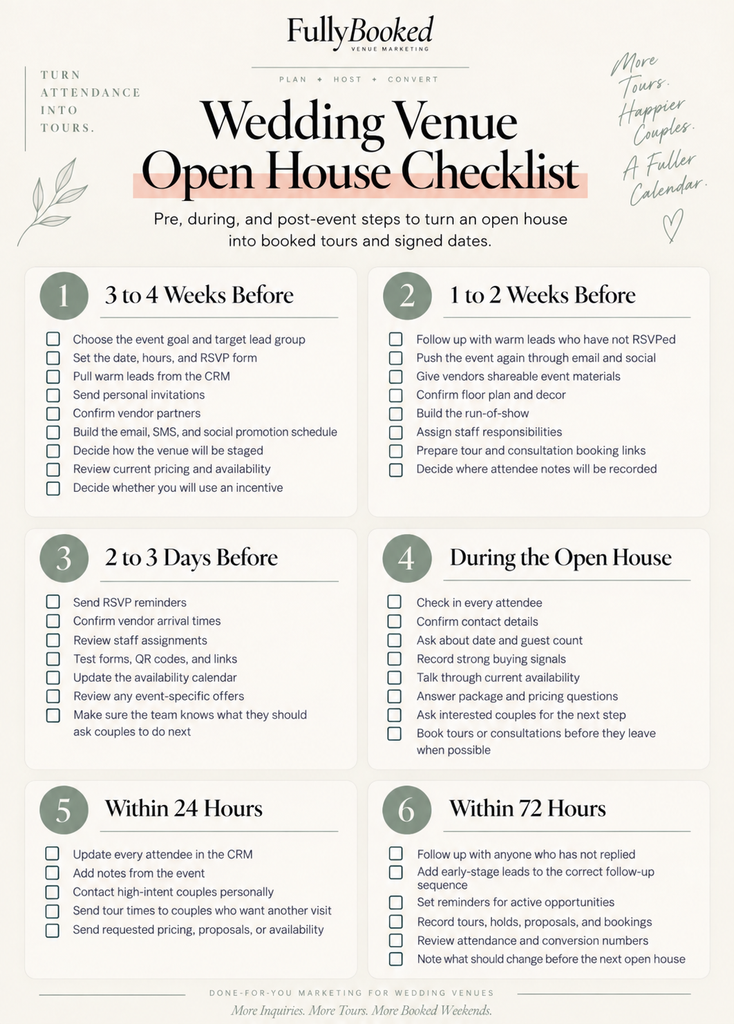
Wedding Venue Open House Checklist
Here is the full playbook in one place.
A Wedding Venue Open House Should Keep Working After Everyone Leaves
A wedding venue open house gives you a rare chance to have many interested couples experience the property at its best while your team, vendors, pricing, availability, and booking process are all within reach.
Plan three to four weeks ahead so you have time to personally invite warm leads, promote the event, coordinate vendors, and stage the venue.
During the event, give couples a clear picture of what a wedding can feel like there and give them an easy way to take the next step.
Then pay close attention to the three days after.
A couple who spent Sunday afternoon looking at your venue should not become another name sitting quietly in the CRM by Thursday.
That is where the open house turns into tours, proposals, held dates, and booked weddings.
Keep Your Open House Leads Moving
The follow-up is where open houses are won or lost.
Fully Booked Venue puts the pipeline, lead tracking, and follow-up automation behind your marketing so interested couples continue hearing from your venue after the event.
If your open houses generate interest but too many leads disappear afterward, book a Fully Booked Venue consultation.
Key Takeaways
- A successful wedding venue open house starts with a clear sales goal, such as booking tours, moving toured couples toward a date hold, or supporting booked clients.
- The strongest attendance usually comes from warm leads already in your CRM, supported by email, SMS, social promotion, and vendor outreach.
- Stage the venue so couples can picture a real wedding day, with ceremony, cocktail, reception, and vendor touchpoints arranged in a natural flow.
- Have pricing, availability, and a clear next step ready during the event so interested couples can book a tour, request a proposal, or discuss a date while they are there.
- Follow up within 72 hours based on each couple’s level of interest, record every interaction in your CRM, and track tours, proposals, holds, and bookings tied to the event.
- Fully Booked Venue can support the pipeline behind the event, helping venues keep open-house leads organized and follow up after the event so interested couples do not disappear from the sales process.
Frequently Asked Questions
How long should a wedding venue open house last?
For most venues, two to three hours is enough time to accommodate several arrival groups without stretching the event across an entire day. Larger properties or venues expecting a high turnout may need a longer window.
Should a wedding venue open house be free to attend?
Usually, yes. Charging admission can add friction for couples who are still early in the venue-shopping process. If you do charge, there should be a clear reason, such as a tasting component or another experience with a real per-person cost.
What day of the week is best for a wedding venue open house?
Sunday afternoons are often a practical choice because many couples are available and the venue may be less likely to have an event booked. Weeknight events can also work well for venues targeting local couples.
How many vendors should participate in a wedding venue open house?
There is no fixed number, but too many vendors can make the event feel crowded or trade-show-like. A smaller group of strong partners that represents the main parts of the wedding day usually creates a better experience.
How often should a wedding venue host an open house?
That depends on your sales calendar and how much inventory you need to move. Some venues may benefit from one or two well-planned open houses a year, while others may use them more often during slower booking periods or after major venue updates.